
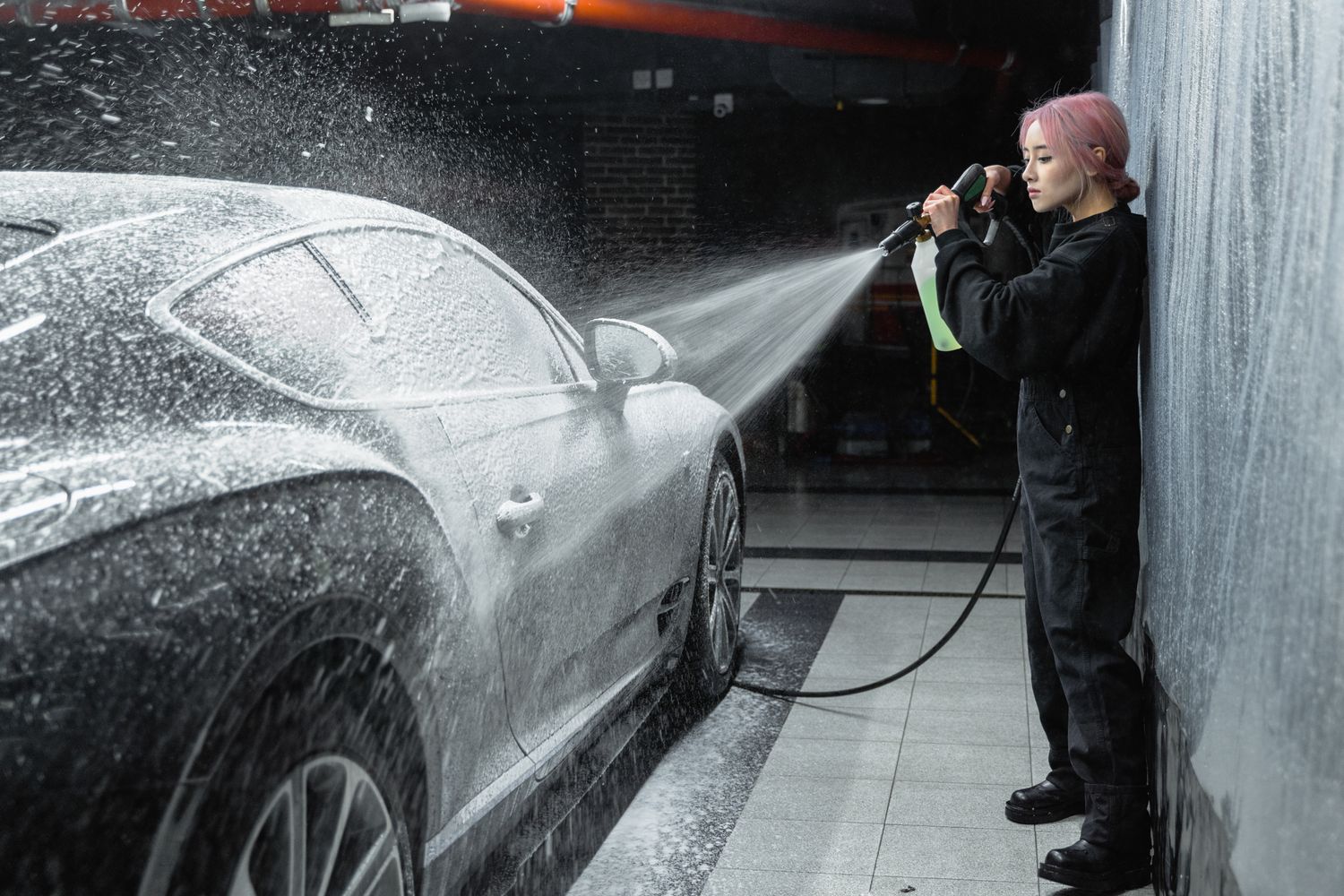
Searching for a do it yourself car wash near me usually means one of two things. Either you want more control over how your car gets cleaned, or you want to save money compared with a full valet. A self-service car wash gives you both. You pay a small fee, use professional-grade equipment, and wash the car exactly the way you like.
Having used self-service bays for years, I can tell you they are brilliant when you know what you are doing and frustrating when you do not. This guide covers how to find a good one, what it costs, and how to get a proper finish without wasting your coins.
What Is a Do It Yourself Car Wash?
A do it yourself car wash, also called a self-service car wash, is a coin or card-operated wash bay where you clean your own vehicle using on-site equipment. Most bays include a high-pressure lance, a foam brush, soap and wax settings, and a rinse cycle. You pay for time, typically in blocks of a few minutes, and control every stage yourself.
This makes it different from an automatic car wash, where machines do the work, and from a hand car wash, where staff clean the car for you.
How to Find a DIY Car Wash Near You
Finding a nearby self-service bay is straightforward if you know where to look:
- Google Maps: Search “self service car wash” or “jet wash near me” and check the reviews and photos before you visit.
- Petrol stations: Many forecourts have jet wash bays alongside their automatic machines.
- Supermarket car parks: Larger stores often host wash facilities on site.
- Car wash finder apps and directories: These list opening hours, prices, and available equipment.
Read recent reviews carefully. A bay with broken lances, weak water pressure, or dirty brushes will do more harm than good. Photos from other users tell you a lot about how well a site is maintained.
How Much Does a Self-Service Car Wash Cost?
Prices vary by location, but most self-service bays cost between £1 and £2 for every few minutes of use. A full wash for an average hatchback usually comes to £4 to £8. Large goods vehicle, or cars that are heavily soiled, cost more because they take longer.
Compare that with £10 to £20 for a basic hand wash, and the savings add up quickly if you wash your car every couple of weeks. The trade-off is your own time and effort.
How to Use a DIY Car Wash: Step by Step
Speed matters at a self-service bay because the clock runs while you work. Here is the routine I use to get a clean finish without feeding the machine twice:
- Prepare before you pay. Remove mats, empty rubbish, and plan your order of work.
- Pre-rinse the whole car. Start from the roof and work down to loosen dirt and grit.
- Apply soap or foam. Use the foam brush gently, or bring your own wash mitt if you prefer.
- Work top to bottom. Roof first, then windows, bonnet, doors, and finally wheels and sills.
- Rinse thoroughly. Leftover soap dries into streaks, so take your time here.
- Use the wax or rinse-aid setting. It helps water sheet off and reduces spotting.
- Dry with a microfibre towel. Bring your own. Air drying leaves water marks, especially in hard-water areas.
One tip from experience: hold the pressure lance at least 30 centimetres from the paint. Getting too close, particularly on older paintwork or stone chips, can lift the finish.
Pros and Cons of Self-Service Car Washes
Like any option, DIY bays have strengths and weaknesses.
Advantages:
- Cheaper than hand washing or professional valeting
- Full control over pressure, products, and technique
- Safer for paint than automatic brush washes
- Proper drainage and legal wastewater disposal, unlike washing on the street in some areas
- Strong water pressure that home hoses cannot match
Disadvantages:
- Shared foam brushes can trap grit and cause light scratches
- Time pressure can make the job feel rushed
- Quality depends on how well the site is maintained
- You still do all the physical work yourself
If your car has fresh paint, ceramic coating, or you are particular about swirl marks, bring your own mitt, buckets, and drying towel and simply use the bay for its water pressure and drainage.
DIY Car Wash vs Automatic vs Hand Wash
Choosing between the three comes down to priorities. An automatic wash is fastest but hardest on paintwork, since the spinning brushes drag dirt across the surface. A hand wash gives a good finish with no effort from you, but it costs the most. A self-service bay sits in the middle: low cost, good results, and paint-safe if you use sensible technique.
For most drivers who care about their car but do not want valet prices every fortnight, the DIY bay is the best value option.
Expert Tips for Better Results
A few habits separate a decent wash from a great one:
- Wash in the shade or on cooler days so soap does not dry on the panels.
- Do the wheels last, or use a separate mitt for them, to avoid spreading brake dust.
- Avoid washing in freezing weather, as water can ice up in door seals and locks.
- Check whether the bay offers spot-free rinse water. It makes drying far easier.
- Visit early in the morning or midweek to avoid queues.
Conclusion
Typing do it yourself car wash near me into Google is the easy part. Getting real value from the visit comes down to choosing a well-maintained site, arriving prepared, and following a top-to-bottom Wrap a Car washing routine. Do that, and you will get a finish close to a professional valet for a fraction of the price. For anyone who washes their car regularly, a good local self-service bay quickly becomes a favourite stop.
Frequently Asked Questions
1. What is the cheapest way to use a do it yourself car wash near me?
Prepare everything before you insert payment, pre-plan your washing order, and bring your own drying towel. Most drivers can finish a small car in one four to five minute cycle with good preparation.
2. Are self-service car washes safe for my car’s paint?
Yes, provided you keep the pressure lance about 30 centimetres from the surface and avoid shared foam brushes that may hold grit. Bringing your own wash mitt is the safest approach.
3. Is a DIY car wash better than an automatic car wash?
For paint protection, yes. Automatic brush washes can cause swirl marks over time, while a careful self-service wash is far gentler. Automatics only win on speed and convenience.
4. How often should I wash my car at a self-service bay?
Every one to two weeks is ideal for most drivers. Wash more often in winter, when road salt builds up and can accelerate rust on the underbody and sills.
5. Can I bring my own products to a self-service car wash?
Usually, yes. Most sites allow your own shampoo, mitts, and towels. Check the site rules first, as a few prohibit outside products to protect their drainage systems.