
If you want to find the best smart plugs with energy monitoring UK shoppers can actually buy in 2026, you need two things: a proper UK 3-pin plug that fits a double socket, and energy data you can trust. We researched manufacturer specifications, live UK retailer prices, and independent reviews to build this roundup, with no hands-on testing claimed.
Quick Answer: The 6 Best Smart Plugs With Energy Monitoring UK Buyers Should Know
| Plug | Typical UK price | Max load | Connectivity | App and voice | UK note |
|---|---|---|---|---|---|
| TP-Link Tapo P110M | Around £13 to £17 | 13A / 2990W | Wi-Fi + Matter | Tapo app; Alexa, Google, Siri | Best overall; slimline fits double sockets |
| TP-Link Tapo P110 | Around £9 | 13A / 2990W | Wi-Fi | Tapo app; Alexa, Google | Cheapest real energy monitoring |
| Meross MSS315 (UK) | Around £24 for a 2-pack | 13A | Wi-Fi + Matter | Meross app; Alexa, Google, Siri | Best for iPhone homes; rich energy app |
| Eve Energy (Matter) | Around £40 | Typical UK loads | Thread + Matter | Eve app; Apple Home, Alexa, Google | No cloud account; needs a Thread border router |
| frient Smart Plug Mini 2 (UK) | Around £46 | 13A | Zigbee 3.0 | Works via your Zigbee hub | ±1% accuracy; great for Home Assistant |
| Innr SP 242 (UK) | Around £15 to £20 | 13A | Zigbee 3.0 | Works via your Zigbee hub | Pairs with a Philips Hue Bridge too |
We have not personally tested these smart plugs; our picks are based on manufacturer specifications, live UK retailer listings, and independent review findings as of October 2026. Prices move often, so check the live price before you buy.
The 6 Picks in Detail
1. TP-Link Tapo P110M: Best Overall
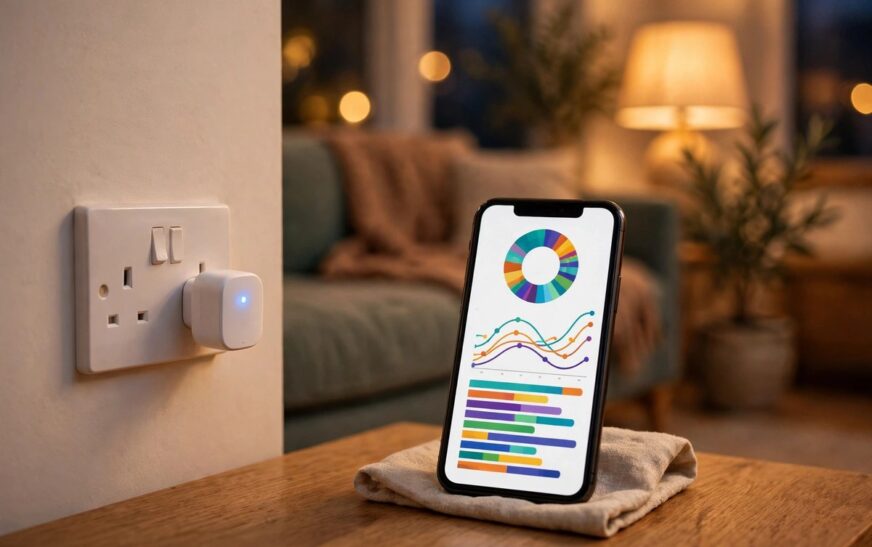
The P110M is the plug to buy if you only buy one. It is Matter certified, so it drops straight into the Alexa, Google Home, or Apple Home app alongside your Tapo app, and it carries proper CE and UKCA safety marks with a 13A (2990W) maximum load. The Tapo app shows live wattage plus daily, weekly, and monthly graphs, and you can enter your own pence-per-kWh tariff so it estimates each appliance’s running cost in pounds.
Watch out for the cheaper P100, which looks identical but has no energy monitoring chip; you want the “110” in the model name. Indoor use only, 2.4GHz Wi-Fi, and no EV charging, which TP-Link explicitly rules out.
2. TP-Link Tapo P110: Best Budget Pick
The non-Matter P110 keeps the same energy monitoring dashboard and 13A rating at roughly half the price, regularly around £9. If you are happy living in the Tapo app and using Alexa or Google Assistant for voice control, there is little reason to spend more. It lacks Matter and therefore Apple Home support, so iPhone-first households should step up to the P110M instead.
3. Meross MSS315 (UK): Best for iPhone Homes
The MSS315 is a Matter-over-Wi-Fi plug with one of the most detailed energy apps on this list. Beyond live and historical graphs, the Meross app adds electricity bill calculation from your unit rate, a “Standby Killer” mode that cuts power when a device drops below a wattage you set, and abnormal-consumption alerts. It scans into Apple Home in seconds with no hub, though an Apple TV or HomePod is needed for away-from-home control.
One honest caveat: the detailed energy data lives in the Meross app, because Matter itself does not pass energy readings through to your platform. More on that below.
4. Eve Energy (Matter): Best for Privacy
Eve Energy runs Matter over Thread with no Eve cloud, no account, and no tracking, which is rare among plug makers. Energy readings appear in the Eve app and your chosen platform. The trade is infrastructure: you need both a Matter controller and a Thread border router (an Apple TV 4K, HomePod, Echo, or Nest device, for example) before it will work at all.
5. frient Smart Plug Mini 2 (UK): Best Zigbee Accuracy
The Danish-made frient Mini 2 is the pick for Home Assistant users who want numbers they can trust. It is a Zigbee 3.0 router with a power meter specified at around ±1% accuracy, a full 13A continuous rating on the UK Type G version, and overload and over-temperature protection. It exposes live watts and cumulative kWh for dashboards, and its compact 48mm square body does not block the second socket.
6. Innr SP 242 (UK): Best for Hue Bridge Households
The Innr SP 242 is a Zigbee 3.0 plug rated for the standard UK 13A maximum, and it is one of the few plugs that pairs natively with a Philips Hue Bridge as well as ZHA and Zigbee2MQTT. The catch: Hue does not pass energy data through, so you only get power metering when it is paired to a proper Zigbee coordinator. Reasonably priced, often cheaper in multipacks, and a solid mid-range choice for established Zigbee homes.
How Energy Monitoring Actually Saves You Money
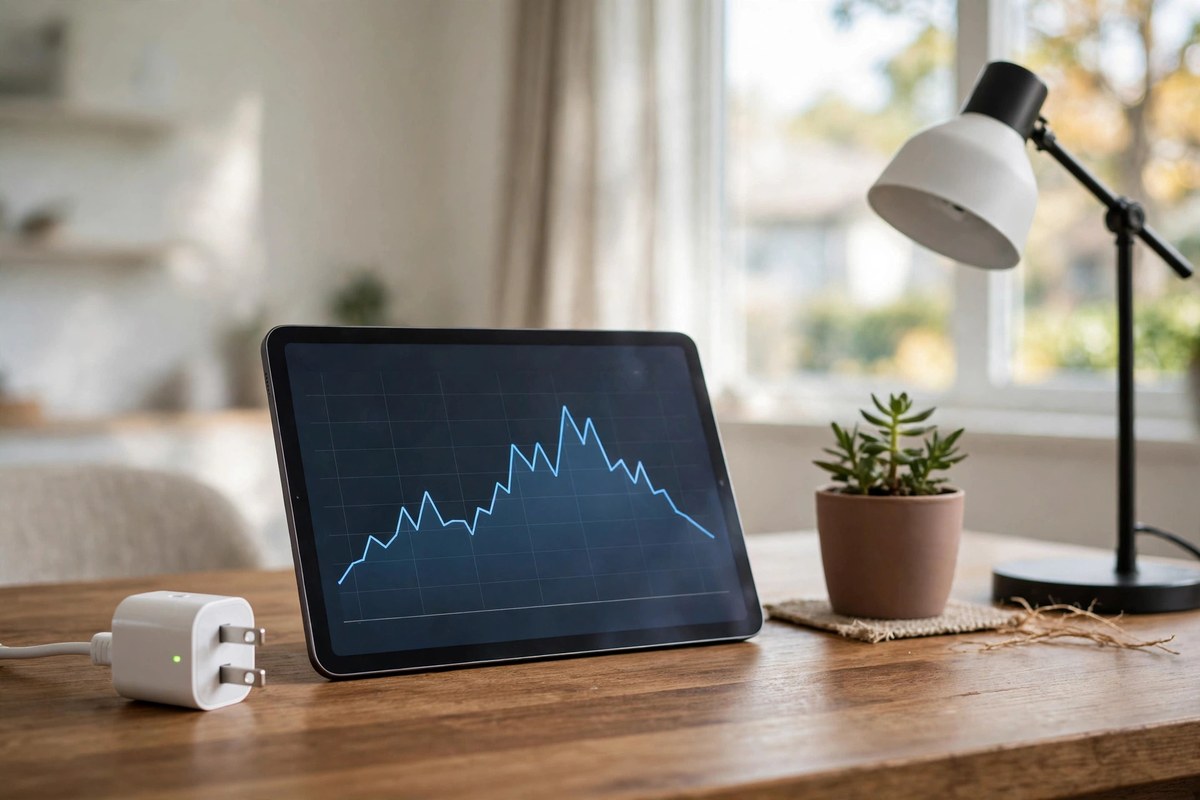
A smart plug does not save money by itself; the data does. The classic win is vampire standby: a TV, soundbar, and console idling overnight can sit at 10W combined without you realising. Run the maths at a typical 2026 tariff of around 24p per kWh and 10W of 24/7 standby costs roughly £21 a year. Two such setups on an overnight schedule that cuts them at bedtime pay for a budget plug like the Tapo P110 in a single winter.
The second win is the rogue appliance hunt. Dehumidifiers, heated clothes airers, and old second fridges are the usual suspects in UK homes; a week of plug-level monitoring tells you exactly which one deserves to run. Our Ecobee vs Nest energy savings comparison takes the same data-first approach, and pairing plugs with one of the best smart thermostats in the UK covers the two biggest slices of a household bill.
The Matter Catch Nobody Mentions
Matter is genuinely useful: one plug, one setup code, and it works in Alexa, Google, and Apple Home. Our Matter vs Thread explainer covers how the standard ends most ecosystem lock-in. But here is the catch for this exact keyword: Matter currently does not carry energy readings between the plug and your platform.
That means on Matter plugs like the Meross MSS315 or the Tapo P110M, the rich energy graphs live in the manufacturer’s own app, while the Matter side mostly gives you on/off control.
Zigbee Plugs, Hubs, and Home Assistant
The frient and Innr picks need a Zigbee coordinator or hub: a Home Assistant setup with a Zigbee stick, a Samsung SmartThings hub, or an Echo with a Zigbee radio built in. Mains-powered Zigbee plugs also act as mesh routers, so a few of them around the house fix dead zones for battery sensors.
Safety and UK Fit
Most UK smart plugs are rated for 13A, roughly 2990W, but that rating is a ceiling, not a target. Do not plug smart plugs into heaters, tumble dryers, washing machines, EV chargers, or anything with a heavy motor load; the continuous heat can damage the internal relay over time. Electrical Safety First is the UK authority on this, and their guidance is clear about keeping high-load appliances on direct wall sockets.
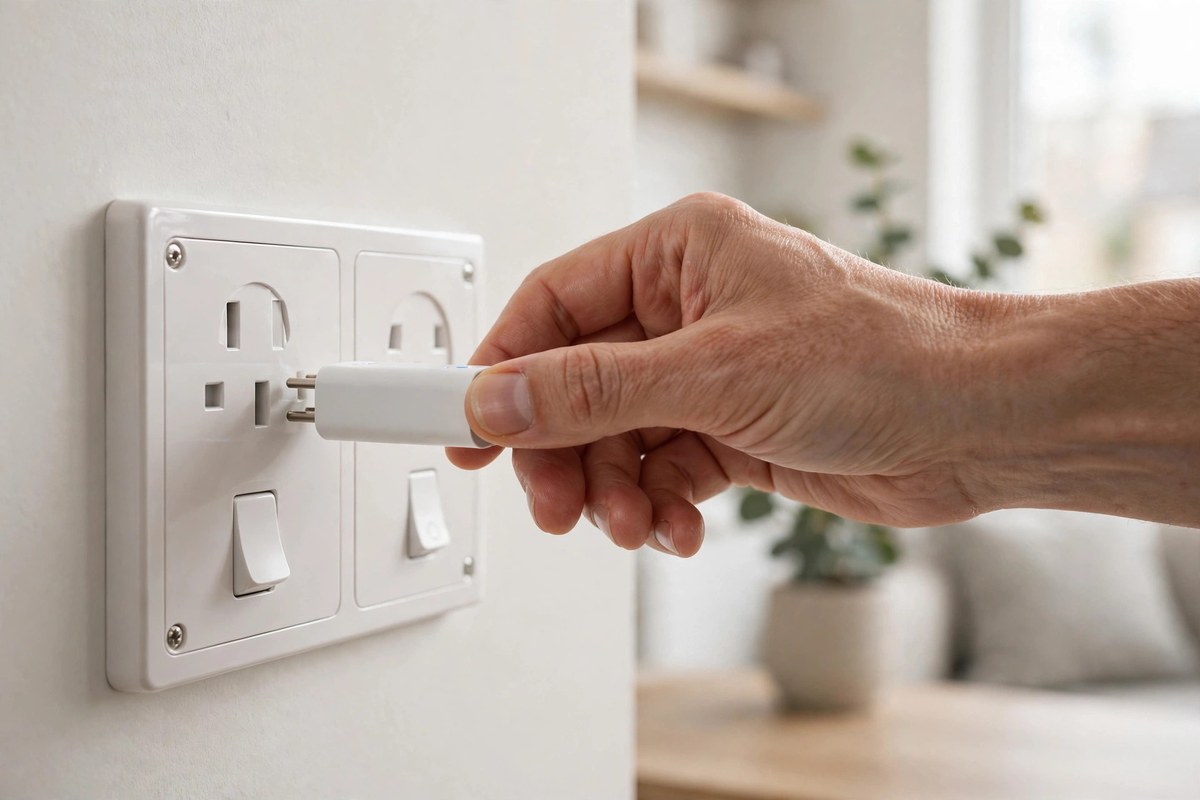
Two more UK-specific points. First, only buy plugs with genuine UKCA or CE marks; grey-market imports without them can void your home insurance if something goes wrong. Second, check slimline sizing against a standard double socket: wide plugs block the neighbouring socket’s rocker switch, which is why the slim Tapo and Meross designs keep winning in the UK. Plugs are also ideal for renters since nothing is wired in; see our best smart locks for renters for more no-drill upgrades.
Conclusion
The best smart plugs with energy monitoring UK homes can buy in 2026 depend on where your smart home lives. Most people should get the TP-Link Tapo P110M for Matter flexibility and a good tariff-based cost dashboard, or the P110 to spend half as much for the same monitoring. iPhone households get the most from the Meross MSS315, privacy-first buyers from Eve Energy, and Home Assistant users from the frient Mini 2 or Innr SP 242. Whichever you choose, enter your real tariff, hunt one vampire load in the first week, and put it on a schedule: that is where the money actually is.
Frequently Asked Questions
Do smart plugs actually save you money?
Only if you act on the data. That is the honest answer behind any best smart plugs with energy monitoring UK roundup. A plug that shows 10W of overnight standby on your TV corner and then cuts it on a schedule can pay for itself within months; a plug you never look at saves nothing. Monitoring finds the waste, schedules and auto-off kill it.
Is a Matter smart plug better than a standard Wi-Fi one?
For control and future-proofing, yes: Matter plugs work across Alexa, Google, and Apple Home with one setup. For energy monitoring specifically, know the catch: Matter does not currently pass energy readings through, so the detailed graphs live in the maker’s own app. If kWh history in a single dashboard matters most, a Zigbee plug with Home Assistant is the stronger route.
Can I use a smart plug outdoors?
Not the picks on this list: they are all indoor-rated (IP20) and must stay dry. If you need to automate garden lights or Christmas displays, buy a purpose-built outdoor-rated plug (typically IP44 or higher) with a weatherproof housing. Never run an indoor plug through a door or window to reach outside.
Do I need a hub for Zigbee smart plugs?
Yes. Zigbee plugs like the frient Mini 2 and Innr SP 242 need a coordinator or hub, such as a Home Assistant Zigbee stick, a SmartThings hub, or a compatible Echo. That is the price of Zigbee’s reliability and local control: no cloud dependency, and your plugs keep working if your broadband goes down.
How accurate is smart plug energy monitoring?
Typical smart plugs are accurate within a few percent, which is plenty for spotting waste and comparing appliances. The frient Mini 2 is specified around ±1%, among the best you can buy at this price. They are not billing-grade meters, so treat the figures as guides rather than something to dispute your electricity bill with.