
Ecobee vs Nest Thermostat: Which One Saves You More Energy in 2026?
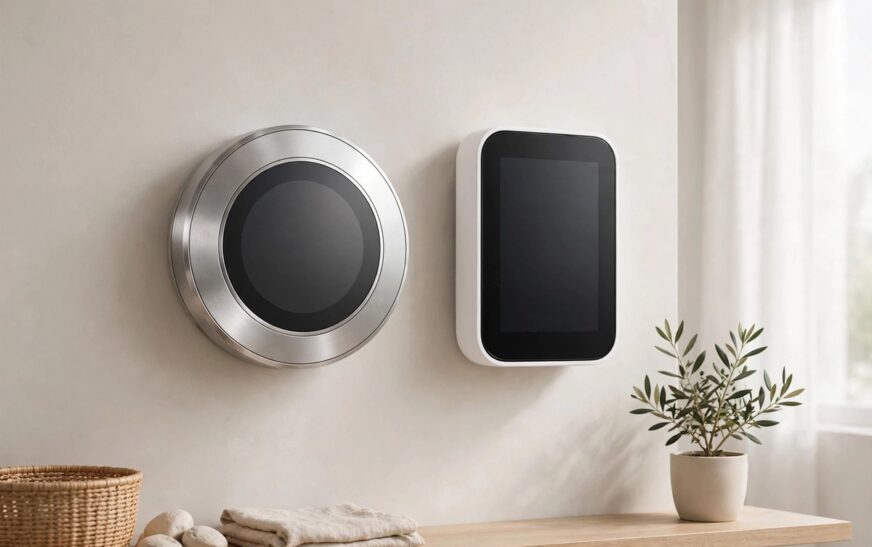
If you are weighing up the Ecobee vs Nest thermostat, which saves more energy is the question that actually matters. Here is the short answer: the Ecobee SmartThermostat Premium edges ahead on pure savings, claiming up to 23% off heating and cooling bills against the Nest Learning Thermostat’s 10 to 15%. But the real-world winner depends on your home, because room sensors and UK boiler compatibility change the maths considerably.
This guide compares both on real savings data rather than marketing claims, with honest prices in pounds and dollars, and a straight answer for UK readers whose combi boiler narrows the choice fast. It sits alongside our wider smart home coverage if you are planning a bigger upgrade.
How we compared them: we analysed manufacturer specifications, independent test data from long-term reviewers, and published energy studies. We have not hands-on tested every unit, so savings figures are drawn from credited third-party tests, not our own lab.
Ecobee SmartThermostat Premium: the sensor-driven saver
The Ecobee SmartThermostat Premium (around $249 in the US) takes a data-first approach to saving energy. Instead of guessing, it measures. A SmartSensor comes in the box, and you can add up to 32 of them around the house. Each one reports temperature and occupancy, so the thermostat heats the rooms you are actually using instead of blasting the whole house because the hallway feels cold.
This is where its headline 23% claim comes from, based on a 2023 Lawrence Berkeley National Laboratory study of 1,200 homes. Independent tests back the direction if not the exact number: one 12-month test recorded an 18% winter gas bill cut and $185 in total annual savings, paying the unit back in about 16 months.
The catch is that the sensors do the heavy lifting. In a 90-day side-by-side test, the Ecobee saved $95 without extra sensors but $156 once SmartSensors were added to bedrooms and the office. Without them, it is an expensive thermostat with a nice screen. With them, it is the most effective energy saver of the two.
Ecobee’s Home IQ reports break down runtime by heating stage and by sensor, so you can see exactly which room drives your bills. Scheduling is manual rather than learned, which suits tinkerers. Alexa is built in.
Google Nest Learning Thermostat (4th Gen): the hands-off learner
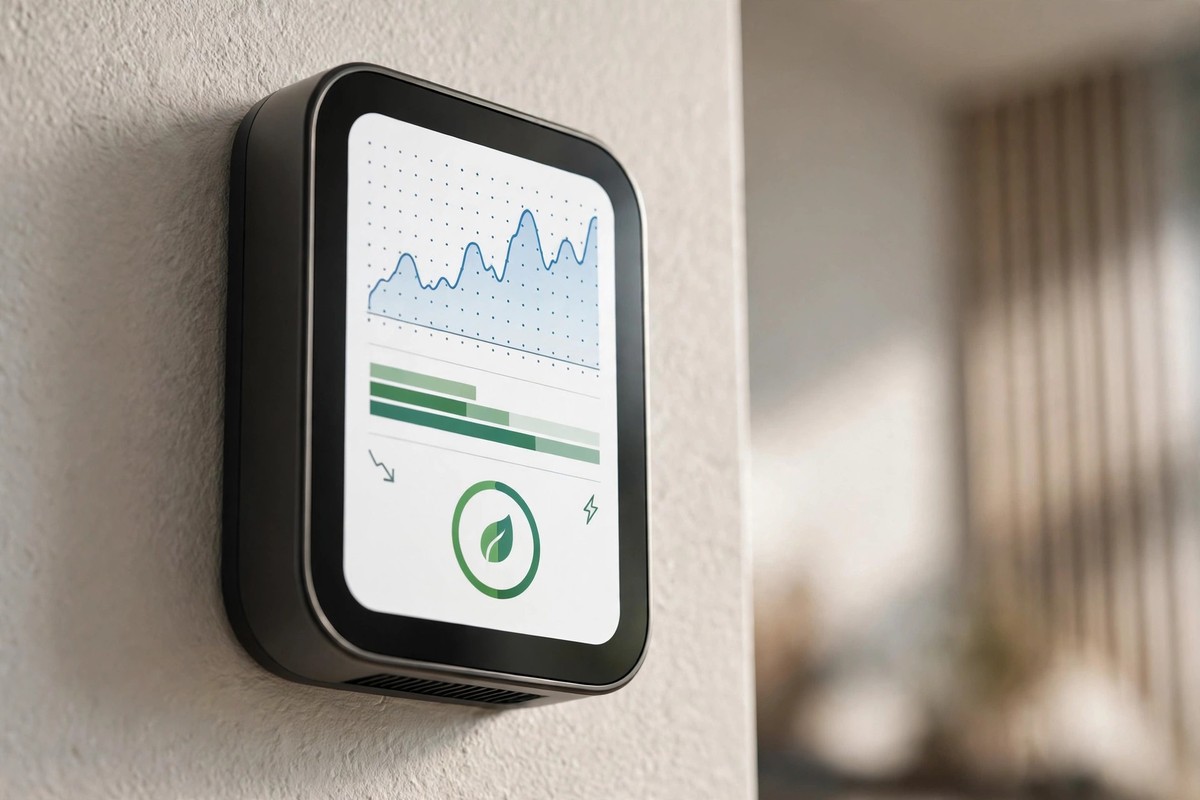
The Google Nest Learning Thermostat (around $249 in the US, about £219 in the UK with the Heat Link included) takes the opposite approach: it learns your routine and handles everything itself. For the first couple of weeks you adjust the temperature as normal, and the Auto-Schedule quietly builds a programme around your life. Long-term testers report barely touching it after month two.
Nest claims 10 to 12% savings on heating and 15% on cooling, based on data from hundreds of thousands of installed devices. In that same 90-day test mentioned above, the Nest saved $142 against the baseline, beating the sensorless Ecobee comfortably. Its strength is consistency: it never forgets to turn the heating down when you leave, thanks to phone location and its Soli radar presence sensing.
The 4th generation model includes a Nest Temperature Sensor in the box, though testing shows it moves the needle far less than Ecobee’s system. Energy reports are clear but aggregated at the system level. If you already live in Google’s world, it pairs beautifully with the display we covered in our Google Nest Hub review.
Ecobee vs Nest Thermostat: Which Saves More Energy in Real Homes?
Marketing claims are one thing. Here is how the two compare on the numbers that matter, drawn from manufacturer data and independent tests:
| Ecobee SmartThermostat Premium | Google Nest Learning Thermostat (4th Gen) | |
|---|---|---|
| US price | Around $249 | Around $249 |
| UK price and availability | No official UK version; imported units lack warranty and support | Around £219 with Heat Link included |
| Claimed energy savings | Up to 23% (heating and cooling) | 10 to 12% heating, 15% cooling |
| Real-world test savings | $95 over 90 days without sensors; $156 with sensors; 18% winter gas cut in a 12-month test | $142 over 90 days; 12% winter gas cut in a 12-month test |
| Room sensors | 1 SmartSensor included; supports up to 32; occupancy plus temperature | 1 Temperature Sensor included; limited effect on heating savings |
| Energy reports | Home IQ: per-stage and per-sensor breakdown | System-level history; less diagnostic detail |
| Learning vs scheduling | Manual schedules plus eco+ automation | Auto-Schedule learns your routine |
| UK combi boiler support | Not designed for UK 230V systems | Yes, via the included Heat Link |
The pattern is clear. Ecobee wins on maximum savings, but only with the sensor ecosystem and setup effort behind it. Nest wins on effortless, consistent savings. In one test the Ecobee with sensors saved $14 more than the Nest over 90 days; without sensors it saved $47 less. The sensors are not an accessory here. They are the product.
UK boiler compatibility: the part most comparisons skip
Most Ecobee vs Nest comparisons are written for American forced-air systems, which is a problem if you heat with a British combi boiler. Here is the honest UK picture.
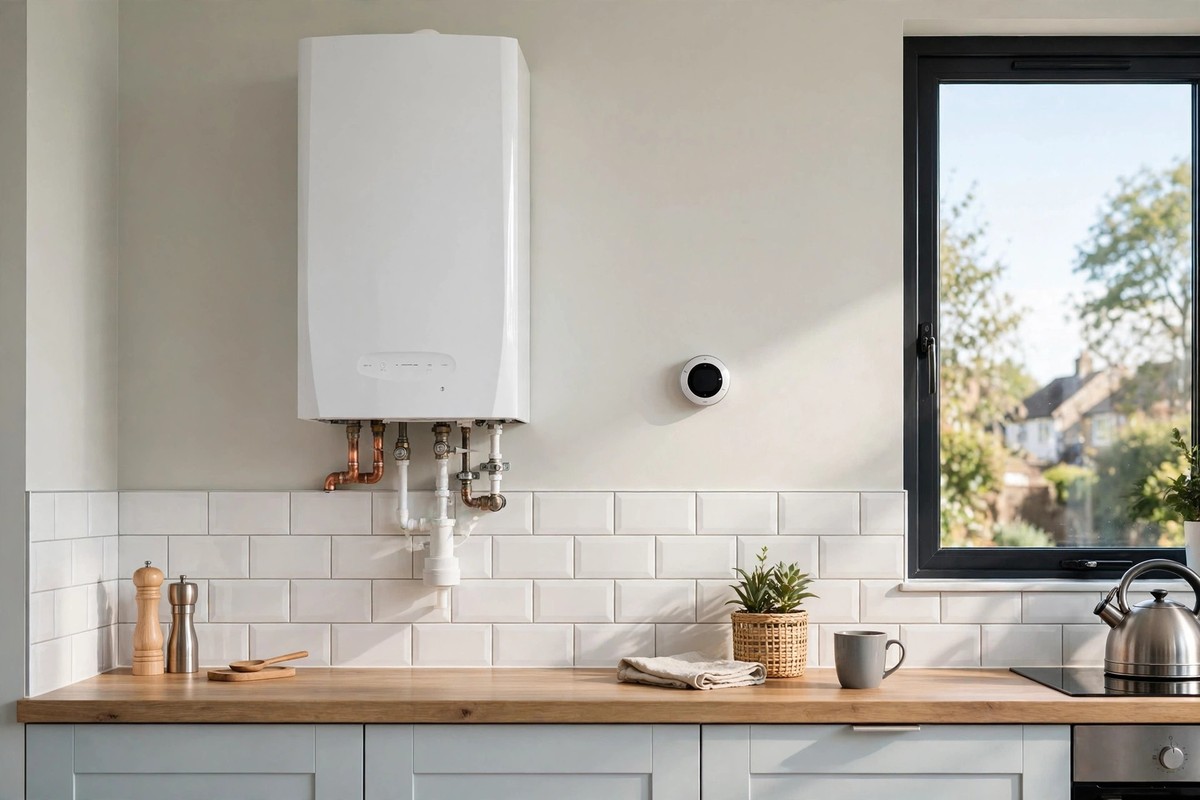
The Nest Learning Thermostat has a proper UK version. It ships with a Heat Link, a small receiver that wires into your boiler and handles 230V mains switching safely while the thermostat runs on low voltage. It works with combi, system and regular boilers. One warning: never wire a low-voltage thermostat directly to UK mains. It will destroy the unit.
Ecobee, by contrast, has no official UK version. It is engineered for North American 24V HVAC wiring, and while determined importers have made it work with relays and adapters, you get no warranty, no UK support line, and no guarantee it will play nicely with your boiler’s controls. For UK readers, that settles it: the Nest is the only sensible choice of the two.
If room-by-room control is what attracted you to the Ecobee, look at systems built for UK radiators instead. Smart TRVs from the likes of Tado or Hive give per-room control on a combi system without import gymnastics. The Energy Saving Trust has solid guidance on heating controls and typical bill savings.
Which should you buy? Our verdict by home type
US home with forced air or a heat pump, and you want maximum savings: get the Ecobee SmartThermostat Premium plus two or three extra SmartSensors. That combination is the proven savings champion.
UK home with a combi or system boiler: get the Nest Learning Thermostat. It is the only one of the two with official UK support, the right wiring hardware in the box, and a meaningful warranty.
You hate fiddling with settings: get the Nest. Its learning algorithm is the closest thing to fit-and-forget, and the savings happen whether you engage with it or not.
You love data and have rooms that never feel right: get the Ecobee (US only). The per-sensor Home IQ reports show exactly where your money goes.
On a budget: both brands sell cheaper models, the Nest Thermostat and Ecobee 3 Lite, which deliver most of the savings for less. Either beats a 20-year-old dial on the wall.
Whichever you choose, a thermostat is one piece of a wider efficient home. Our best smart lock for renters guide shows how renters can upgrade without rewiring anything.
Conclusion
So in the Ecobee vs Nest thermostat which saves more energy debate, the Ecobee SmartThermostat Premium takes the crown on raw numbers, but only with room sensors and only in North American homes. For UK readers it is simpler: the Nest Learning Thermostat works with your boiler, is sold and supported here, and still saves 10 to 15% with zero effort. Match the thermostat to your heating system first and your personality second. For what else is worth adding, see our best smart home devices for modern living roundup.
FAQs
Ecobee vs Nest thermostat: which saves more energy in real homes?
The Ecobee, provided you use room sensors. Tests show it saving slightly more than the Nest with sensors (around $156 vs $142 over 90 days), while the sensorless Ecobee falls behind. Without sensors, the Nest delivers more consistent savings.
Does the Ecobee work with UK combi boilers?
Not officially. Ecobee has no UK version and is designed for North American 24V systems. Imported units have no UK warranty or support and need wiring workarounds. UK households should choose the Nest Learning Thermostat, which ships with a Heat Link for combi, system and regular boilers.
Do I need the room sensors for the Ecobee to save energy?
Yes, they make most of the difference. Testing shows the Ecobee’s savings jumping from $95 to $156 over 90 days once sensors were added. The sensors let it heat occupied rooms rather than the whole house, which is the core of its efficiency advantage.
How long does it take for a smart thermostat to pay for itself?
Typically 12 to 18 months. One test recorded $185 in annual savings with the Ecobee, roughly a 16-month payback on a $249 unit. The Nest’s UK price of around £219 can pay back even faster where heating bills are high.
Ecobee vs Nest thermostat: which saves more energy for a UK home?
The Nest, by default, because it is the only one of the two that officially supports UK heating systems. An Ecobee cannot save you anything if it is not properly compatible with your boiler. Fitted correctly with its Heat Link, the Nest typically cuts heating bills by 10 to 15%.