
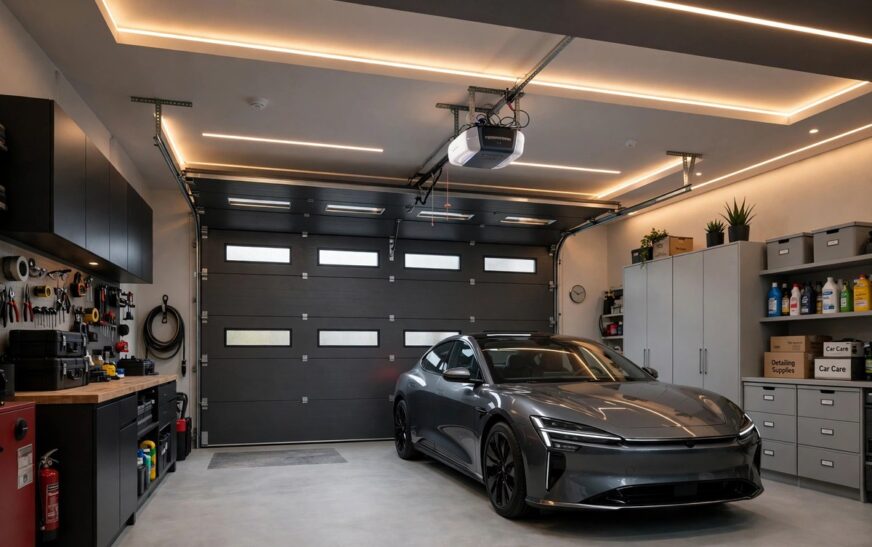
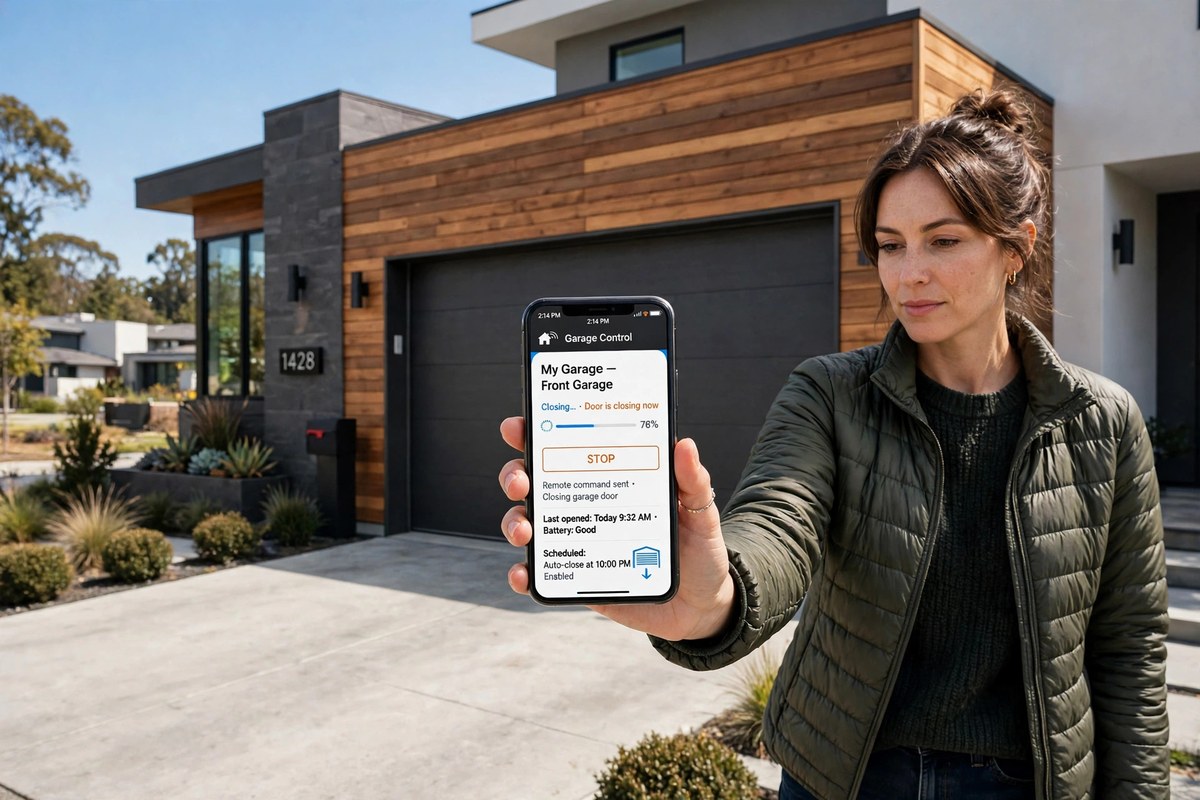
Choosing the best smart garage door opener in 2026 comes down to one simple question: do you want to make your existing opener smart, or replace it completely? A good smart opener lets you check the door from anywhere, close it from your phone, get an alert when it moves, and give family or a delivery driver temporary access without handing over a remote. This guide compares five strong picks, explains the retrofit versus replacement choice, and covers the security and setup points the top guides gloss over.
Best Smart Garage Door Opener Picks at a Glance
The table below is the quick answer. Read the notes underneath it before you buy, because compatibility matters more than brand loyalty in this category.
| Pick | Type | Best for | Typical price range |
|---|---|---|---|
| Chamberlain myQ Smart Garage Hub | Retrofit controller | Cheapest smart upgrade | Budget retrofit range |
| Meross Smart Garage Door Opener | Retrofit controller | Apple Home and multi-platform homes | Budget retrofit range |
| Chamberlain B6753T | Full replacement opener | Premium all-round replacement | Upper mid range to premium |
| Genie StealthDrive Connect 7155 | Full replacement opener | Quiet operation for attached garages | Mid range to premium |
| LiftMaster 87504 | Full replacement opener | Battery backup and heavy doors | Premium range |
Prices are given as typical ranges, not live quotes, because retailer prices move with sales. The Connected Haven guide puts add-on controllers at roughly $29 to $99 and complete smart openers at roughly $250 to $500 or more, while This Old House puts entry-level openers at roughly $179 to $224 and advanced models above $400. That spread is the whole story: a retrofit costs a fraction of a replacement, so only replace the opener if the motor, rail or safety system actually needs replacing.
1. Chamberlain myQ Smart Garage Hub: Best Cheap Retrofit
If your opener still works well, this is the pick most people should start with. The hub adds phone control, open and close alerts, scheduled auto-close and guest access to most openers made after 1993, and it supports Amazon Key in-garage delivery in qualifying areas. Installation usually takes 15 to 30 minutes: mount the hub, fit the door sensor and connect to Wi-Fi. The trade-offs are real, though. The myQ app shows ads on its free tier, and Chamberlain has restricted some third-party integrations, so Home Assistant users should look at a Matter controller instead. For a straightforward phone-controlled garage, it is hard to beat on value.
2. Meross Smart Garage Door Opener: Best for Apple Home
Meross is the retrofit to choose if you live in the Apple ecosystem. It works natively with Apple HomeKit, so the door appears in the Home app and responds to Siri, and it also works with Alexa, Google Assistant and SmartThings. There is no subscription for its core features, and setup follows the same simple pattern as the myQ hub. The main thing to check is compatibility: Meross publishes a long compatibility list, so confirm your opener model before ordering rather than assuming it will work. If your garage Wi-Fi is weak, add a Wi-Fi extender or mesh point first, because every retrofit in this guide depends on a stable signal at the garage ceiling.
3. Chamberlain B6753T: Best Premium Replacement
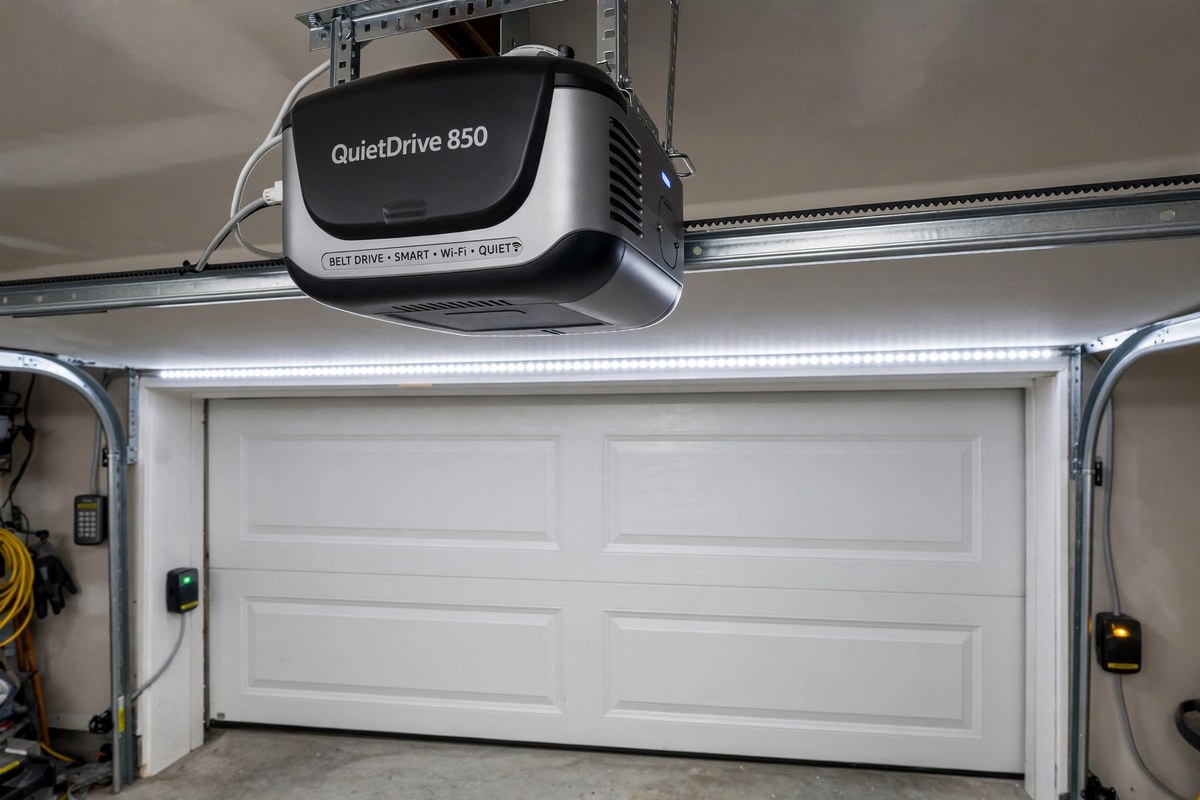
The B6753T is the full replacement to buy when you want everything in one box: an ultra-quiet belt drive, built-in myQ Wi-Fi, battery backup, bright integrated LED lighting and a timer-to-close function. The Connected Haven guide lists it at around $398, which puts it firmly in premium territory, but it replaces an ageing, noisy opener and its smart features in a single install. Professional installation is recommended and typically takes two to four hours. If your current opener is loud, slow or missing safety sensors, this is a better spend than bolting a smart controller onto a dying motor.
4. Genie StealthDrive Connect 7155: Best Quiet Replacement
Noise is the reason many people replace an opener, especially when the garage sits under a bedroom. The StealthDrive Connect uses a steel-reinforced belt drive and a direct current motor, which makes it noticeably quieter than an old chain drive, and it pairs that with built-in Wi-Fi through the Aladdin Connect app, Alexa and Google Assistant support, and integrated battery backup. Its motor is rated for heavier insulated and wooden doors, so it suits double garages and heavier sectional doors better than a light-duty model. Check the door weight and height against the model rating before you buy, because an underpowered opener strains, runs slowly and wears out early.
5. LiftMaster 87504: Best Battery Backup Pick
Power cuts are where a smart opener either earns its price or lets you down. The LiftMaster 87504 includes battery backup rated for dozens of open and close cycles during an outage, plus built-in myQ control, a quiet direct current motor with soft start and stop, and motion-activated LED lighting. This Old House rates lifting power and drive type as the two most important buying factors, and this model scores on both: a strong belt drive and a motor built for regular heavy use. It is a premium purchase, so it makes most sense for homes that depend on garage access daily or live in an area with frequent outages.
Retrofit or Replacement: How to Decide
Choose a retrofit if your opener is less than about ten years old, runs smoothly, has photoelectric safety sensors, and only lacks smart control. Choose a full replacement if the motor struggles, the chain or belt is worn, the door reverses for no clear reason, or the opener predates 1993 safety sensors. Never fit a smart controller to an opener without working safety sensors: the sensors stop the door if something crosses its path, and they are a legal safety requirement on modern openers in both the UK and the US. Our guide to whether smart home devices can be hacked covers the wider security habits that apply here too, from strong unique passwords to two-factor authentication on the app account.
Drive type matters as much as smart features. Belt drives are the quietest and suit attached garages, chain drives are cheaper and tougher but noisier, and wall-mounted jackshaft openers free up ceiling space in garages with high or obstructed ceilings. Motor power should match your door: light single doors manage on a smaller motor, while heavy insulated or double doors need the higher ratings found on the Genie and LiftMaster picks above. If you are unsure, measure the door size and weight, then check it against the opener rating rather than guessing from the price.
Smart Home Integration, Security and UK Notes
Before buying, decide which voice assistant and platform your home already uses. MyQ works well with Alexa and Google but needs a workaround for Apple Home, Meross is native to HomeKit, and Matter controllers such as THIRDREALITY can sit across Apple Home, Google Home and SmartThings at once. Our Matter versus Thread explainer is worth reading if your home mixes platforms, because the standard you choose decides which automations keep working when one app changes its rules. Whatever you buy, turn on alerts for every open and close, review guest access regularly, and keep the opener firmware updated.
UK buyers should note that most of the big US guides assume sectional or up-and-over doors with US opener rails, so check that the model you choose is sold and supported for your door type in the UK, and confirm the power supply and warranty terms. A camera built into the opener is useful for checking deliveries, but pair it with a proper outdoor camera if the garage holds bikes or tools: our best outdoor security cameras without a subscription guide compares subscription-free options. Finally, remember the total cost, not just the opener price: professional fitting, a Wi-Fi extender and, on a replacement, disposal of the old unit can add a meaningful amount, as our smart home cost breakdown shows for whole-home projects.
Conclusion: Which Best Smart Garage Door Opener Should You Buy?
For most homes, the best smart garage door opener is the cheapest one that fits: a myQ hub or Meross controller on a healthy existing opener, with alerts on and auto-close scheduled at bedtime. Replace the whole opener only when noise, power or safety demands it, and then buy for quiet belt drive operation, battery backup and the platform your home already uses. Get compatibility, door weight and Wi-Fi signal right before you order, and the garage becomes one of the most useful rooms in your smart home rather than the one you keep worrying about.
Frequently Asked Questions
Will the best smart garage door opener work with my old opener?
Most retrofit controllers work with openers made after 1993 that have photoelectric safety sensors. Check the brand compatibility tool for your exact model first, and replace the opener entirely if it predates safety sensors or the motor is failing.
Do I need a subscription for a smart garage door opener?
No, not for the core features. Opening, closing, alerts and scheduling are free on the main controllers. Paid extras are usually extended video storage for camera models or delivery services, so check what is behind a paywall before you buy a camera model.
What happens to a smart garage door opener if the internet goes out?
You lose remote control and alerts, but the wall button and remotes still work. Automations that run in the cloud will pause until the connection returns, which is why a battery backup model matters during a power cut rather than just an internet outage.
Is a smart garage door opener secure?
Modern openers use encrypted codes that change with every use, so the weak points are usually the account, not the radio signal. Use a strong unique password, turn on two-factor authentication, remove old guest access, and keep firmware updated.
Can I use a smart garage door opener for parcel deliveries?
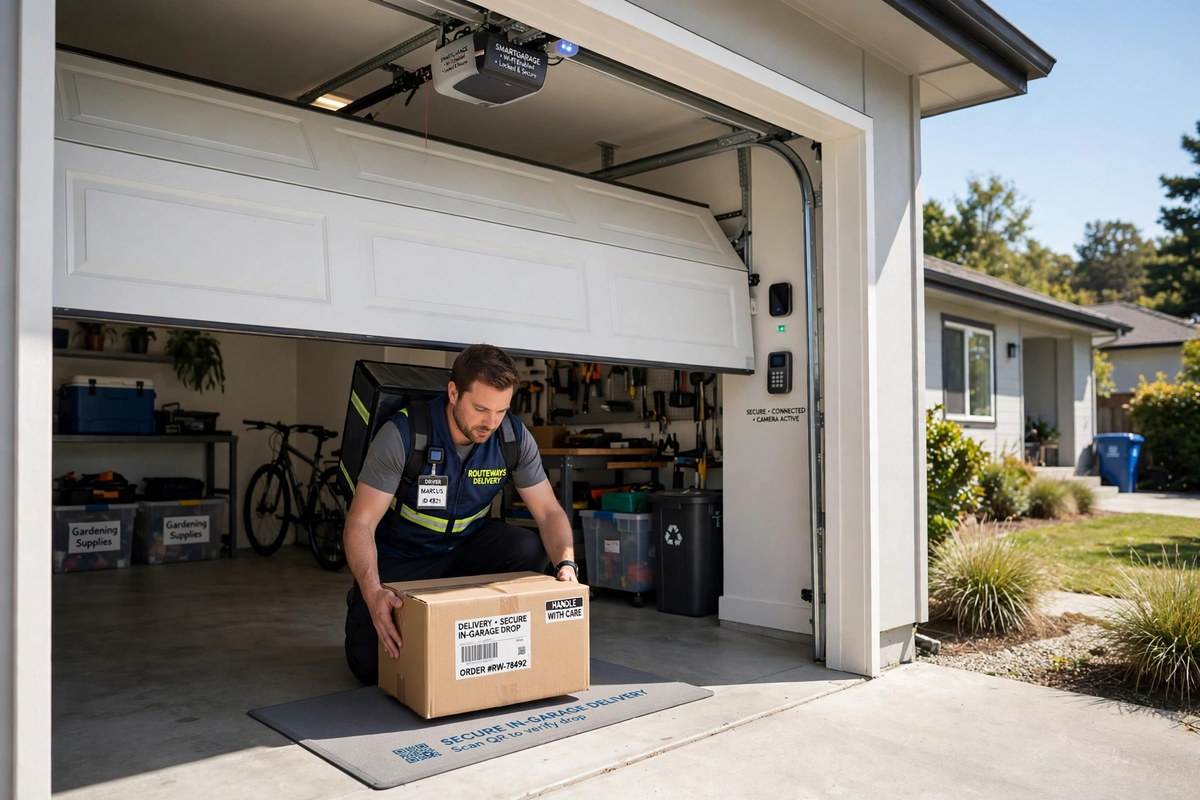
Yes, if you choose a myQ-compatible model in a supported area. Amazon Key in-garage delivery lets a driver open the door once for a parcel, and you get an alert plus a camera view on camera models. Set delivery hours and review the access log afterwards.