
If you are shopping for smart home gadgets that lower energy bills, start with one honest fact: only a handful of devices actually pay for themselves. Heating, hot water and standby power eat most of your bill, so the gadgets that attack those three areas win, and the rest are mostly convenience dressed up as savings. This guide ranks 10 gadgets by cost, typical saving and payback, using indicative 2026 figures.
Smart Home Gadgets That Lower Energy Bills: Cost, Saving and Payback at a Glance
The table below is the short version of this guide. Costs are typical UK retail prices in 2026, and savings are indicative figures from ENERGY STAR and US Department of Energy data, not promises for your home.
| Gadget | Typical cost | Typical annual saving | Payback |
|---|---|---|---|
| Smart thermostat | £150 to £250 | 8% of heating and cooling costs | 1 to 2 years |
| Smart radiator valves | £50 to £80 per radiator | Heats only rooms you use | 2 to 3 years |
| Smart plugs with energy monitoring | £10 to £25 each | Part of the 5 to 10% standby load | Under 1 year |
| Smart power strip | £25 to £45 | Kills standby across a whole TV setup | Under 1 year |
| Smart LED bulbs and sensors | £8 to £20 per bulb | Up to 75% less lighting energy per bulb | 1 to 2 years |
| Smart blinds and shades | £200 to £500 per window | Less heating and cooling load | Several years |
| Whole-home energy monitor | £100 to £300 | 5 to 15% once you act on the data | 1 to 3 years |
| Smart water heater controller | £100 to £200 | Heats water only when needed | 1 to 2 years |
| Smart EV charger | £800 to £1,200 installed | Off-peak charging rates | Varies by mileage |
| Off-peak appliance routines | £0 with kit you own | Cheaper overnight electricity | Immediate |
1. Smart Thermostat
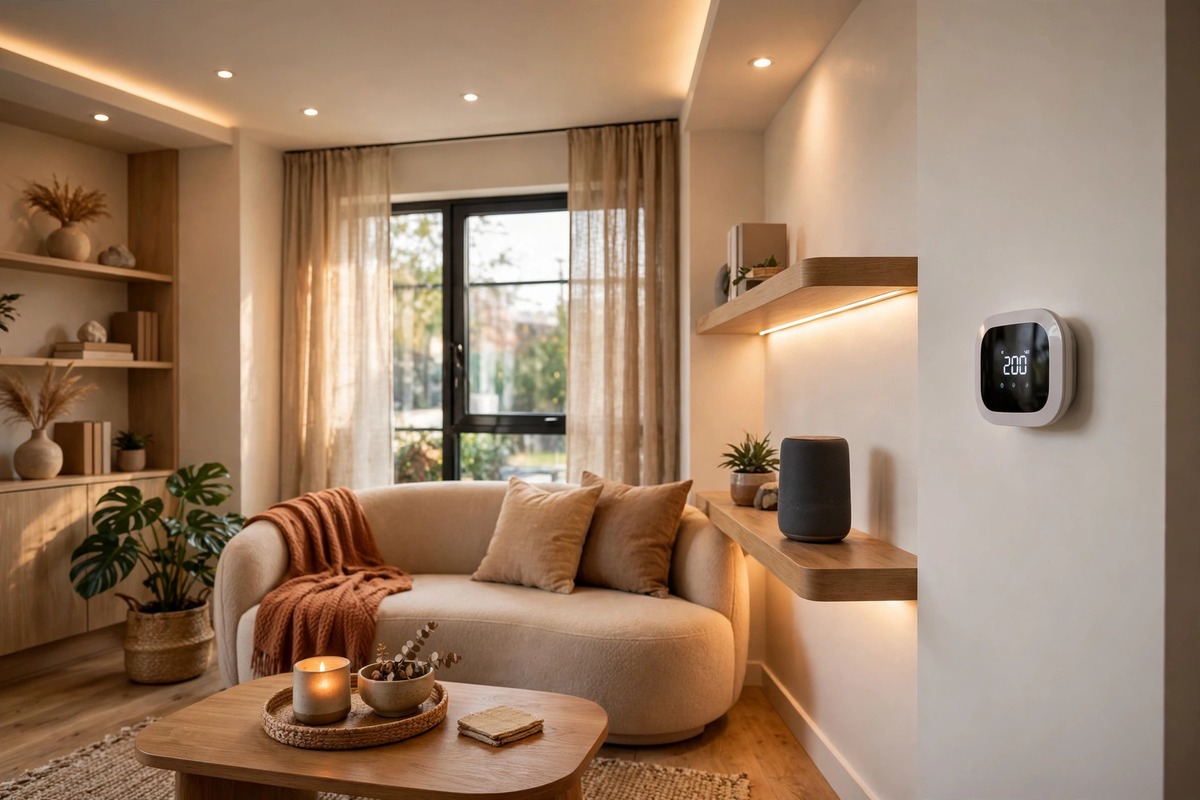
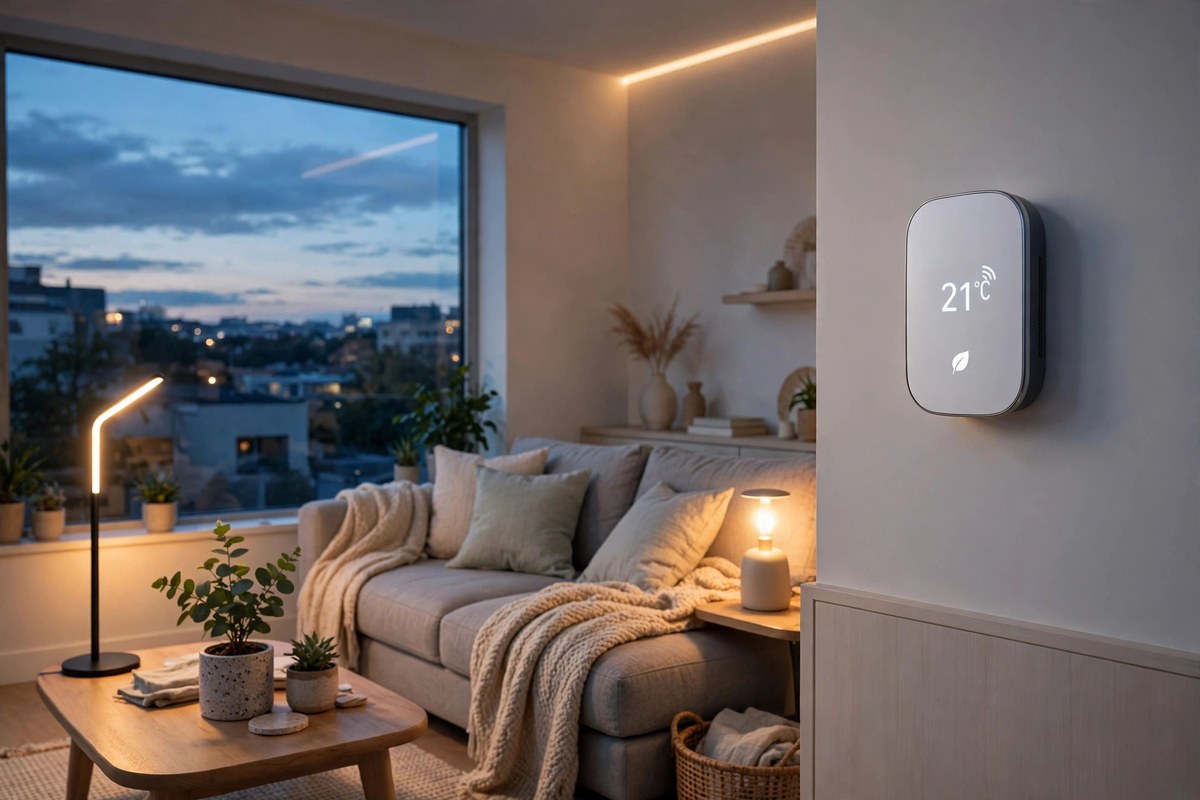
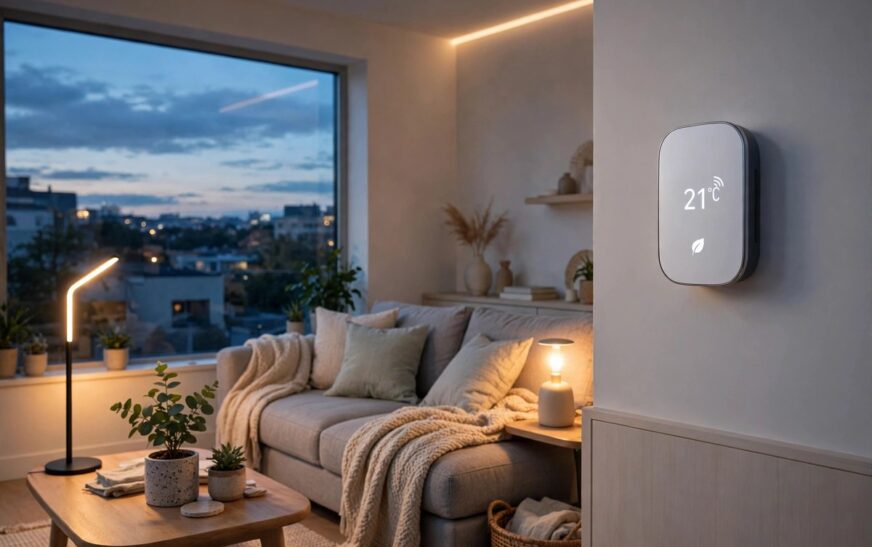
A smart thermostat is still the single biggest energy win for most homes, because heating is usually the largest bill. Learning models build a schedule from your routine, geofencing drops the temperature when the house is empty, and remote sensors stop one cold room from overworking the system. ENERGY STAR puts typical savings at around 8% of heating and cooling costs for certified models, which is often enough to pay for the device within two heating seasons. See our guide to the best smart thermostats in the UK, and our Ecobee vs Nest energy savings comparison.
2. Smart Radiator Valves
Smart radiator valves, also called TRVs, are the UK home’s secret weapon, and most US-focused guides ignore them completely. They let you set a different temperature in each room, so a spare bedroom stops being heated to living room temperature all winter. They pair with a smart thermostat, fit most existing radiators, and are often renter friendly because they screw on without plumbing work. Start with the rooms you use least.
3. Smart Plugs With Energy Monitoring
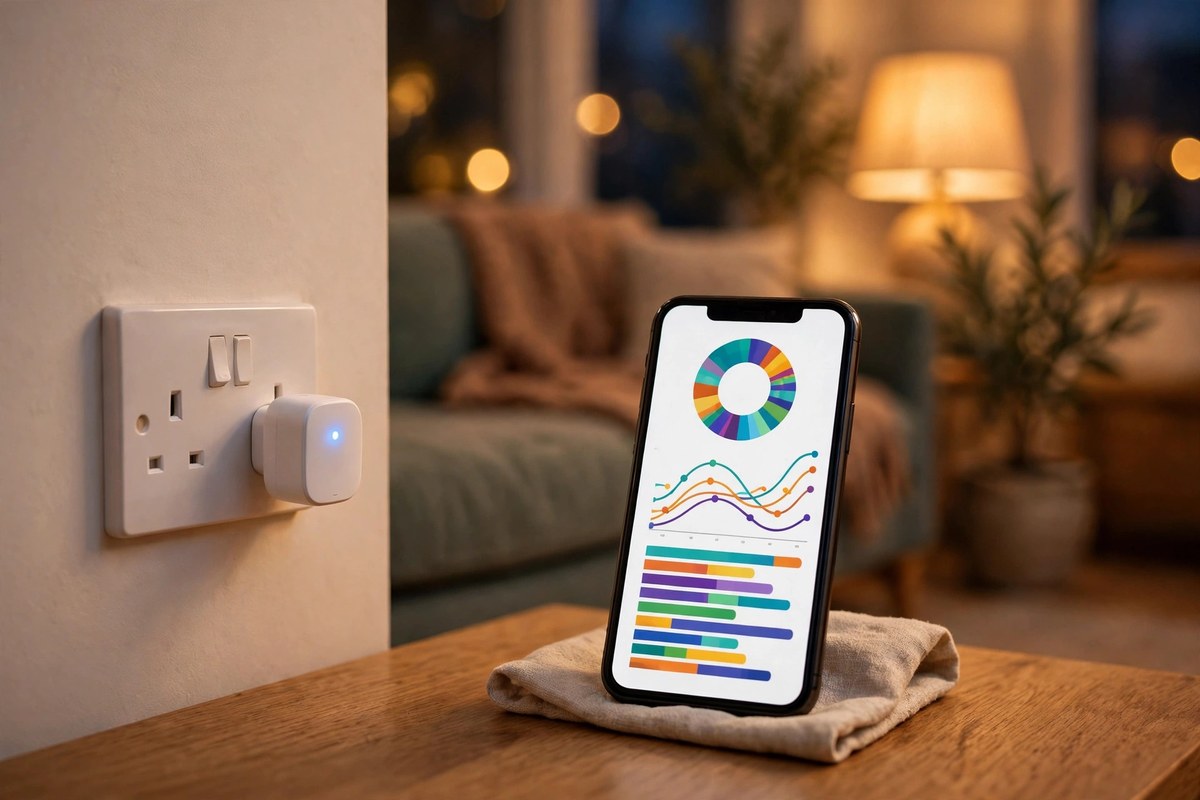
Standby power, often called vampire load, accounts for roughly 5 to 10% of home electricity use according to the US Department of Energy. A smart plug with energy monitoring does two jobs: it cuts power to idle devices on a schedule, and it shows you exactly which device is the culprit. The usual offenders are the TV setup, the games console and the old set-top box. Our guide to the best smart plugs with energy monitoring covers the UK models worth buying. At £10 to £25 each, one plug on your worst standby offender often pays for itself within a year.
4. Smart Power Strips
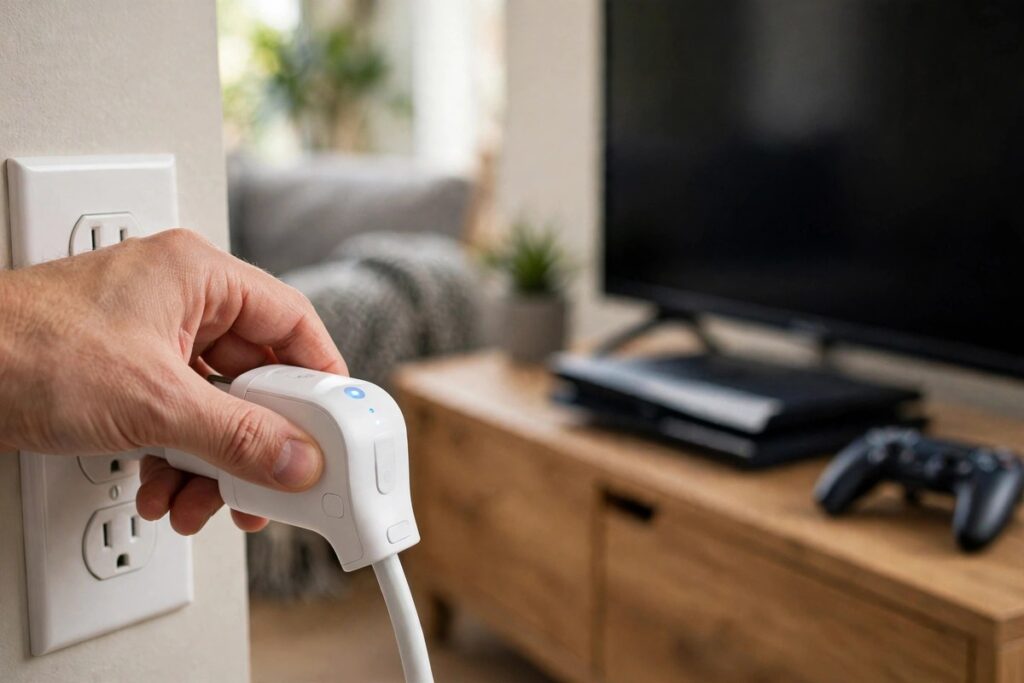
A smart power strip does the same job as a smart plug, but for a whole entertainment centre or home office in one device. One master outlet senses when the TV or PC switches off, and the strip then cuts power to the accessories around it. A TV setup can have five or six devices sipping standby power at once, so a strip is cheaper and tidier than a plug for every socket.
5. Smart LED Bulbs and Motion Sensors
LED bulbs already use up to 75% less energy than old incandescent bulbs, so the smart layer is about stopping waste rather than efficiency. Motion sensors switch lights off in empty rooms, schedules stop the hallway light burning all night, and dimming to 50% roughly halves the power draw of that bulb. The honest caveat is that lighting is a small share of most bills, so smart lighting alone will not transform your energy costs. Buy bulbs room by room rather than replacing the whole house at once.

6. Smart Blinds and Shades
Smart blinds manage solar heat gain: closed against summer sun, open to winter sun, and shut at night to add an insulating layer at the window. The US Department of Energy notes that heat gained or lost through windows accounts for around 25 to 30% of home heating and cooling energy, so the physics is real. The catch is price. At £200 to £500 per window, payback takes several years, so prioritise the sunniest rooms.
7. Whole-Home Energy Monitor
A whole-home energy monitor clamps onto your consumer unit and reports total usage in real time, often identifying individual appliances by their electrical signatures. Households that act on this data typically cut total usage by 5 to 15%, because the monitor turns an abstract bill into specific fixes, such as an old fridge or an immersion heater left on. The monitor itself saves nothing, so it only pays if you act on what it shows.
8. Smart Water Heater Controller
Water heating is usually the second biggest energy cost after space heating. A smart controller learns when you actually use hot water and heats the tank only then, instead of keeping a full tank hot around the clock. For households with an immersion heater or a hot water cylinder, payback is often within one to two years.
9. Smart EV Charger With Off-Peak Scheduling
If you charge an electric car at home, a smart charger is a genuine bill cutter, not a gadget. It schedules charging for off-peak overnight rates, and some models pause charging during expensive peak windows automatically. The saving depends on your tariff and mileage, but for regular drivers the peak to off-peak difference can be hundreds of pounds a year.
10. Off-Peak Appliance Routines
The cheapest entry on this list costs nothing. If your tariff has cheaper overnight rates, schedule the washing machine, dishwasher and tumble dryer to run off-peak using routines in the smart home platform you already own. A smart plug can add scheduling to an older appliance. This is fully renter friendly, since nothing is wired in. Never schedule a tumble dryer to run while you are asleep.
What to Buy First
If you are starting from zero, buy in this order. First, a smart thermostat, because heating dominates the bill. Second, smart plugs on your worst standby offenders, because they are cheap and the saving is immediate. Third, a whole-home energy monitor, or smart radiator valves if you have rarely used rooms. Buy the rest when the room or device needs replacing anyway.
What Is Not Worth Buying for Energy Savings
Not every smart device earns its place on an energy list. Smart fridges cost a premium and their screens add power draw rather than cutting it. Replacing every bulb with premium colour smart bulbs in one go takes years to pay back. And voice control by itself saves nothing. Buy them for convenience if you want them, but do not count them as energy investments.
Conclusion
Smart home gadgets that lower energy bills work best when they target your biggest costs in order: heating first, hot water second, standby power third. A smart thermostat, smart radiator valves and a few energy-monitoring plugs beat a house full of premium gadgets bought at random. Start with the cheapest wins and add bigger investments only where the numbers make sense. Before you buy more kit, read our Matter vs Thread explainer.
Frequently Asked Questions
Do smart home gadgets that lower energy bills really save money?
Yes, but only the gadgets that target your biggest costs. A smart thermostat typically saves around 8% of heating and cooling costs, but no single gadget will halve your bill.
Which smart home gadget saves the most energy?
For most homes it is a smart thermostat, because heating and cooling is usually the largest share of energy use. A smart EV charger on an off-peak tariff can save more in cash terms, but only for drivers.
Are smart plugs worth it for saving energy?
Yes, when they are put on the right devices. A plug on a TV setup in standby all day can pay for itself within a year, while a plug on a lamp you already switch off will save almost nothing.
Can renters use these energy-saving gadgets?
Most of them, yes. Smart plugs, smart bulbs, motion sensors and off-peak routines need no rewiring and move with you. Thermostats and radiator valves need your landlord’s permission first.
How long until smart home gadgets pay for themselves?
Smart plugs pay back within a year. A smart thermostat typically pays back within one to two heating seasons. Smart blinds take several years, so treat those as comfort upgrades.