
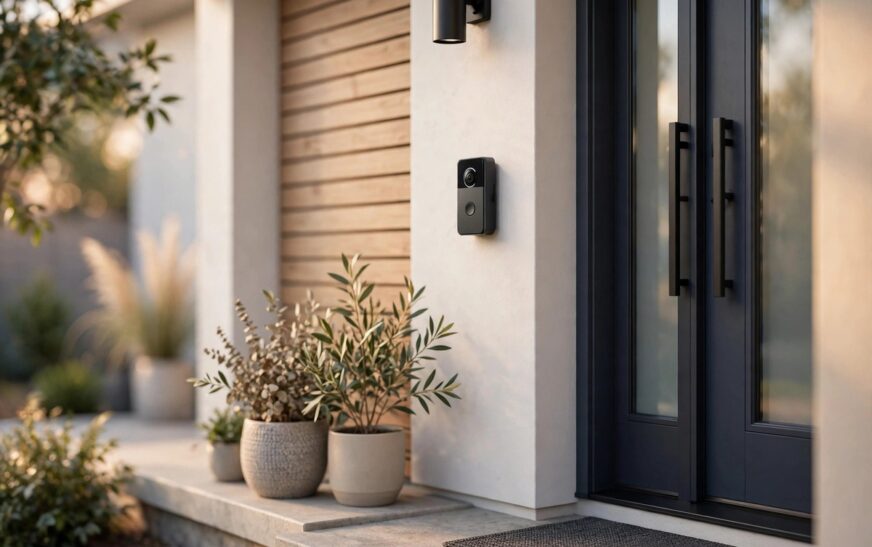
If you are comparing ring vs eufy video doorbell options, one question settles the debate: are you happy paying a monthly fee to keep your video history, or would you rather pay nothing ongoing and store clips at home? Ring’s current top doorbell, the Battery Doorbell 4K Pro, leans on its Ring Protect subscription for recorded footage. The eufy Security Video Doorbell E340 keeps things local with built-in storage and no required plan. In this guide we compare the two on price, cameras, storage and smart home fit so you can decide whether ditching the subscription is worth it. We at RankNestHub compare specs, typical prices and verified review findings, never claiming hands-on tests we did not run.
Ring vs eufy video doorbell: head-to-head at a glance
Both are flagship doorbells from their brands, but they take opposite approaches to storage. The table below summarises the key differences before we go into detail.
| Feature | Ring Battery Doorbell 4K Pro | eufy Security Video Doorbell E340 |
|---|---|---|
| Typical price | ~$149.99 / £150 range | ~$179.99 RRP, often discounted to ~$120 |
| Main camera | 4K, 140-degree field of view | 2K front camera, head-to-toe view |
| Second camera | None | Downward-facing package lens |
| Video history | Ring Protect subscription required (~$3-10/mo tiers) | 8GB built-in local storage, no plan needed |
| Night vision | Standard night vision | Colour night vision |
| Power | Battery (rechargeable) | Battery (claimed up to 6 months) or hardwired |
| Smart home | Alexa, works best in Amazon ecosystem | Alexa and Google Assistant, no HomeKit |
| Weather rating | Weather resistant | IP65 |
The subscription question: what Ring Protect actually covers
Let us clear up a common myth first. A Ring doorbell does work without a subscription: Live View and motion alerts keep functioning for free. What you lose without Ring Protect is recorded video history, and the advanced people and package alerts tied to it. Roundups quote subscription tiers around $3 to $10 a month, and that monthly cost is the real trade-off you are weighing.
With the eufy E340, there is no equivalent plan to pay. Clips are saved to 8GB of built-in local storage, and you only hit a limit if your door gets a lot of traffic. If you want more room, a HomeBase 3 hub adds extra storage, but that is a one-off hardware purchase of roughly $150, not a monthly bill. For buyers comparing video doorbells without a subscription, this is exactly the point of the comparison.
Price: what you pay up front
The Ring Battery Doorbell 4K Pro typically retails around $149.99, making it the cheaper buy on day one. The eufy E340 lists at roughly $179.99, but it is discounted often and frequently lands near $120 at major retailers. Because Amazon and other stores move prices constantly, treat any figure as a range and check the live price before buying.
Running-cost maths depends heavily on which Ring plan you pick, so a single “3-year total” figure would be misleading. As a rough guide: if you subscribe to Ring Protect for two or three years, the total you pay can easily overtake the upfront cost of the eufy. But if you only need Live View and real-time alerts, Ring costs you nothing after the doorbell itself.
Camera and video quality
On pure resolution, Ring wins: the Battery Doorbell 4K Pro records in 4K with a 140-degree field of view and 10x enhanced zoom, which helps with reading faces and number plates from a distance. The eufy E340 shoots in 2K with head-to-toe coverage from its main camera, plus a second downward-facing lens aimed at the doorstep.
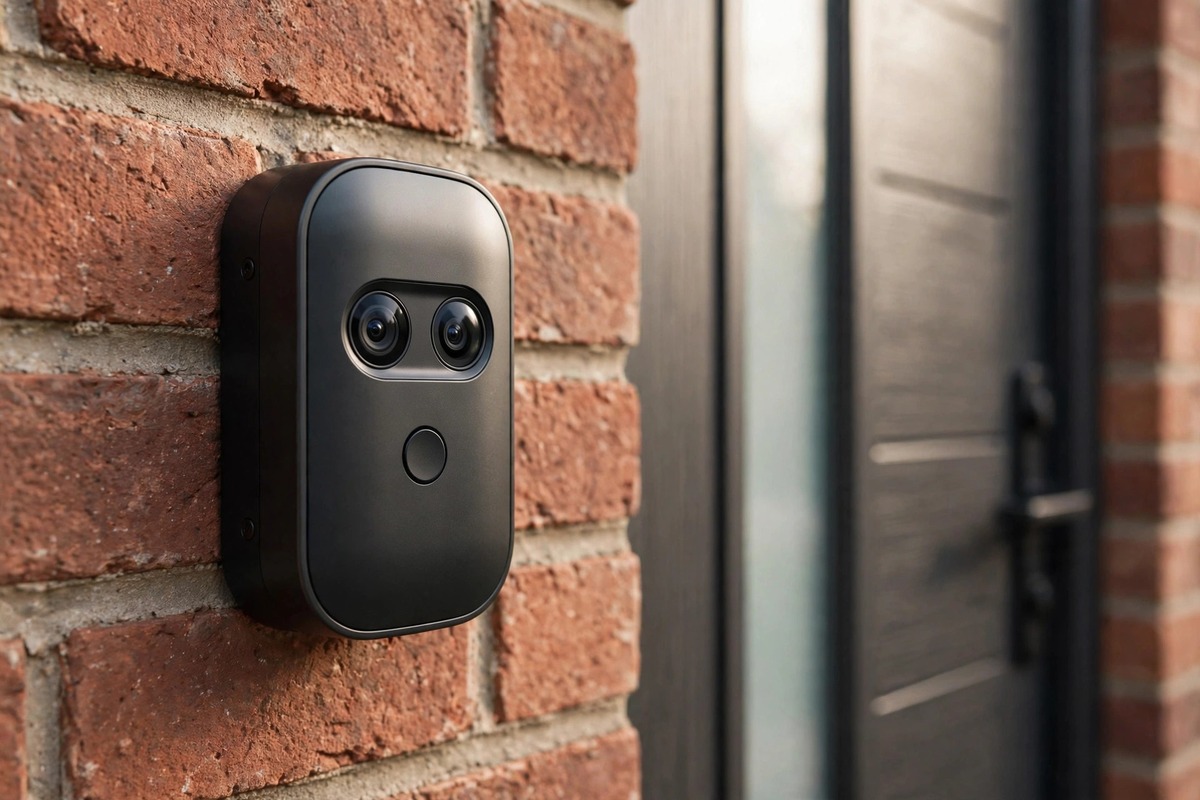
That second lens is the eufy’s party trick. Most doorbells crop out the ground directly below them, so parcels sit in a blind spot. The E340’s package camera fixes that, which matters a lot if you get frequent deliveries. The eufy also offers colour night vision, while Ring uses standard night vision. If crisp zoomed-in detail is your priority, Ring leads; if watching the doorstep matters more, eufy’s dual-lens design earns its keep.
Local storage vs cloud: how each one keeps your footage
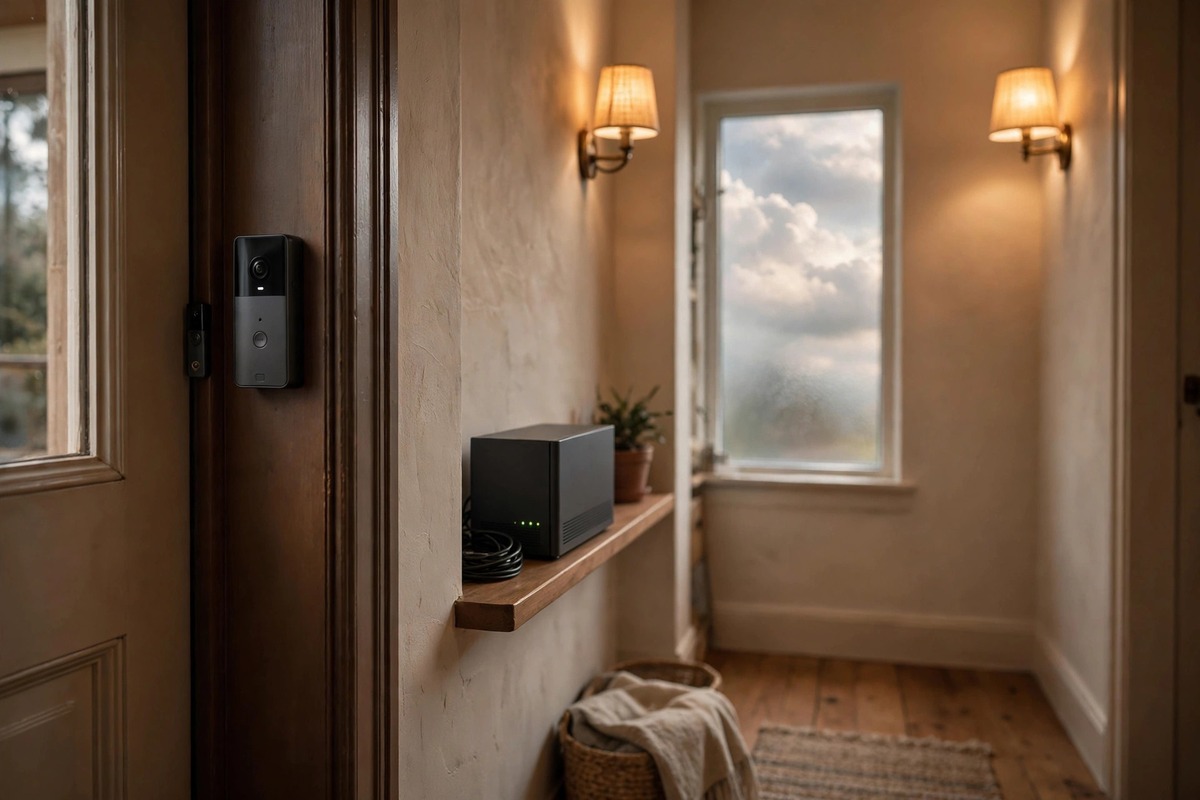
The eufy approach is simple: footage lives on the doorbell itself, viewable in the app with no plan. Nothing uploads anywhere unless you want it to, which also keeps your clips private. The main risk is capacity: 8GB is plenty for occasional visitors, but a busy front door will overwrite older clips sooner. Expandable HomeBase storage solves that for a one-time cost.
Ring’s cloud approach gives you a longer, searchable event history with smart alerts for people and packages, synced across devices. The downside is dependence: stop paying and the recorded history disappears. Think of Ring as renting your footage archive, and eufy as owning a smaller one outright. Similar logic applies to outdoor security cameras without a subscription, where local storage keeps costs predictable.
Installation, power and smart home compatibility
Both doorbells run on rechargeable batteries, and the eufy can also be hardwired to an existing chime circuit. Eufy claims up to 6 months of battery life, though figures vary by source, so treat that as a best-case claim rather than a promise. Ring’s battery life depends on how often motion triggers recording, like every battery doorbell.
Smart home fit is where they diverge. Ring is built for Alexa households and sits naturally inside the Amazon ecosystem. Eufy works with both Alexa and Google Assistant, but it does not support Apple HomeKit, so Apple-centric homes should rule it out. If you are building a Matter-based setup, our Matter and Thread guide explains which standard matters more for your home.
Verdict: is ditching the subscription worth it?
Choose the eufy E340 if monthly fees are the deal-breaker. You get dual cameras, local storage with no plan, colour night vision and solid assistant support for a similar or lower price than Ring’s 4K flagship. The main sacrifices are lower resolution, no HomeKit, and a smaller video archive unless you add a HomeBase.
Choose the Ring Battery Doorbell 4K Pro if you want the sharpest video, the longest searchable cloud history, and the tightest Alexa integration, and you are comfortable with Ring Protect as an ongoing cost. If you skip the plan, remember you keep Live View and motion alerts, just not recorded history. Phandroid’s 2026 video doorbell roundup covers both models and lines up with this breakdown.

Conclusion
In the ring vs eufy video doorbell comparison, the subscription is the story. Ring’s 4K Pro delivers sharper video and a polished cloud experience, but its best features sit behind a monthly plan. Eufy E340 gives you a subscription-free doorbell with a genuinely useful dual camera and local storage, at the cost of lower resolution and no HomeKit. For most buyers who resent monthly fees, ditching the subscription with eufy is worth it. For those who want 4K and don’t mind the plan, Ring remains the safer flagship pick.
Frequently Asked Questions
In the ring vs eufy video doorbell debate, which one needs a subscription?
Ring needs a Ring Protect subscription for recorded video history and advanced people and package alerts, with tiers quoted around $3 to $10 a month. The eufy E340 needs no subscription at all: footage is stored locally on 8GB of built-in storage.
Does a Ring doorbell work at all without a subscription?
Yes. Live View and motion alerts keep working without a Ring Protect plan. You only lose recorded video history and the smart alerts that depend on cloud processing.
Does the eufy E340 need the HomeBase hub?
No. The E340 works standalone with its built-in 8GB local storage. The HomeBase 3 is optional and only adds extra storage capacity for a one-time hardware cost of roughly $150.
Which doorbell is better for watching parcels?
The eufy E340. Its downward-facing second camera is aimed at the doorstep, covering the blind spot where parcels sit. The Ring 4K Pro has a wider 140-degree view, but no dedicated package lens.
Do either of these doorbells work with Apple HomeKit?
The eufy E340 does not support HomeKit, which is the main caveat for Apple-ecosystem households. Ring works best with Alexa and the Amazon ecosystem.