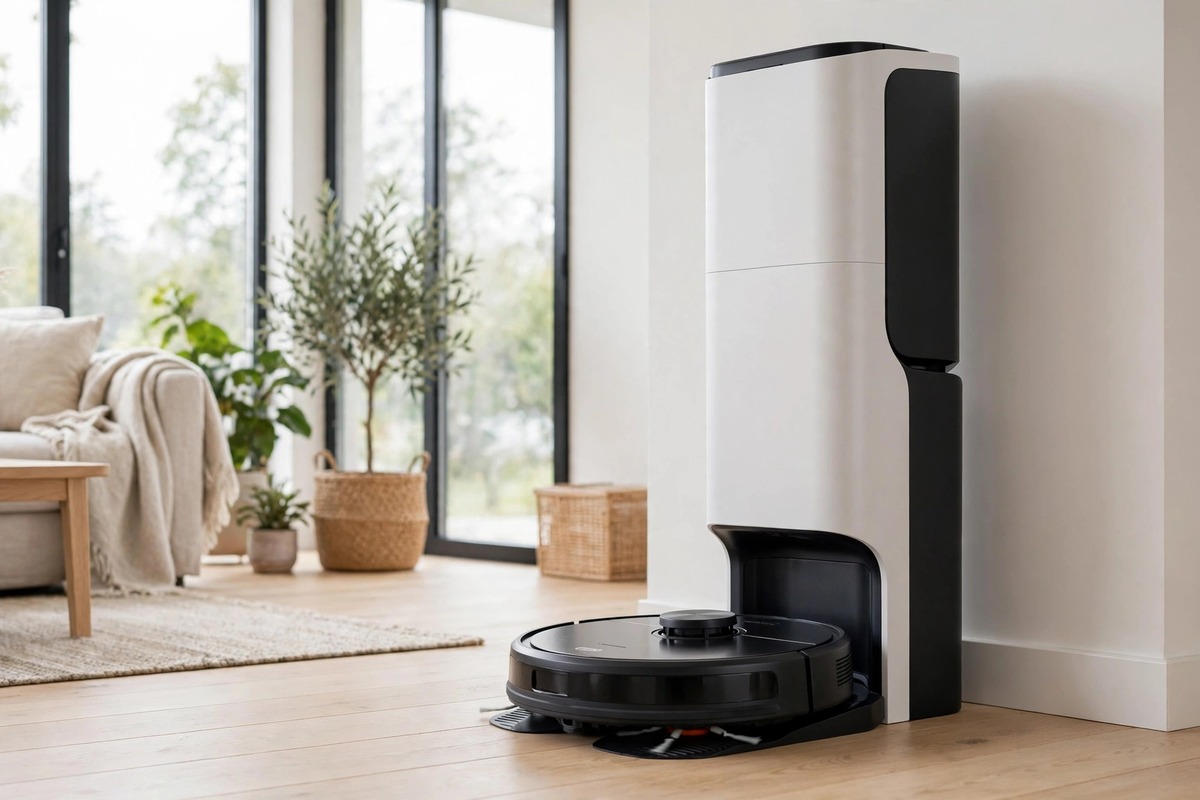

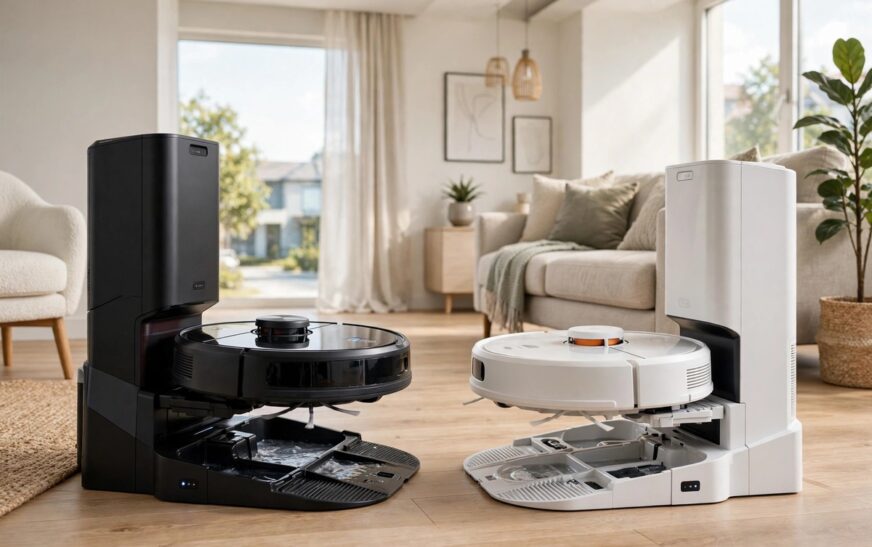
The Roborock vs Dreame robot vacuum 2026 decision is harder than it has been in years. Dreame displaced Roborock as the global market leader in unit sales and revenue in the first quarter of 2026, according to IDC data in market tracking reported this autumn, and both brands have released new flagships within months of each other. We compared specs, October 2026 prices, verified review findings and warranty terms across every price tier, with no hands-on lab testing claimed.
Roborock vs Dreame Robot Vacuum 2026: The Short Answer
Neither brand is always better. After working through the current lineups, the honest verdict is this: buy Dreame if your budget sits under roughly $600 and mopping performance matters most, and buy Roborock if you want the best obstacle avoidance, the most polished app, or a machine you can trust to run on schedule without babysitting. Above $600, Roborock is still the more consistent choice.
The two brands also have different strengths by tier, which is why brand loyalty can steer you wrong:
| Tier | Roborock pick | Dreame pick | Winner |
|---|---|---|---|
| Flagship | Saros 20 (36,000 Pa, StarSight 2.0 navigation) | X60 Pro Ultra (42,000 Pa, extendable reach arms) | Roborock for polish, Dreame for mopping reach |
| Mid-range | Qrevo 2 Pro (roughly $650 as of Oct 2026; Matter support; dock parks mops for carpet) | D30 Ultra (roughly $540 as of Oct 2026; 25,000 Pa; 3-year warranty) | Dreame on price and warranty, Roborock on ecosystem |
| Budget/value | S8 Pro Ultra (roughly $449 as of Oct 2026) | L10s Ultra Gen 2 (roughly $380 as of Oct 2026) | Dreame on price, Roborock on avoidance |
Prices move constantly with sales, so treat the figures above as an October 2026 snapshot. If you want the wider market before deciding, our guide to the best robot vacuum and mop combos with self-emptying shows how these two stack up against the rest of the field.
Round 1: Mopping Performance (Dreame Wins)
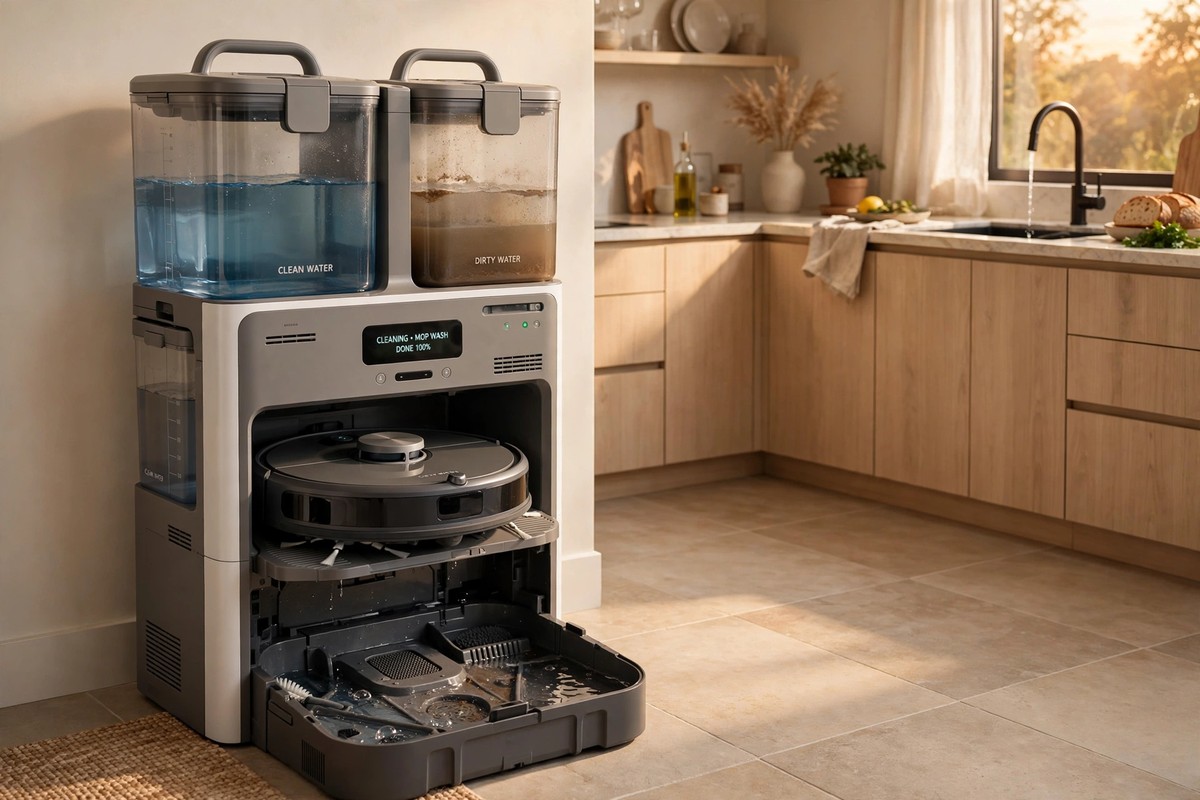
This is the round Dreame wins most clearly. Its flagship mopping approach uses spinning pads that extend outward past the robot body to reach skirting boards and corners, an idea Roborock has no direct answer to at most price points. In 2026 Dreame has gone further with roller-based models like the Aqua10 line, which pump fresh water through a rotating cylinder and extract dirty water instead of dragging a soiled pad around the room.
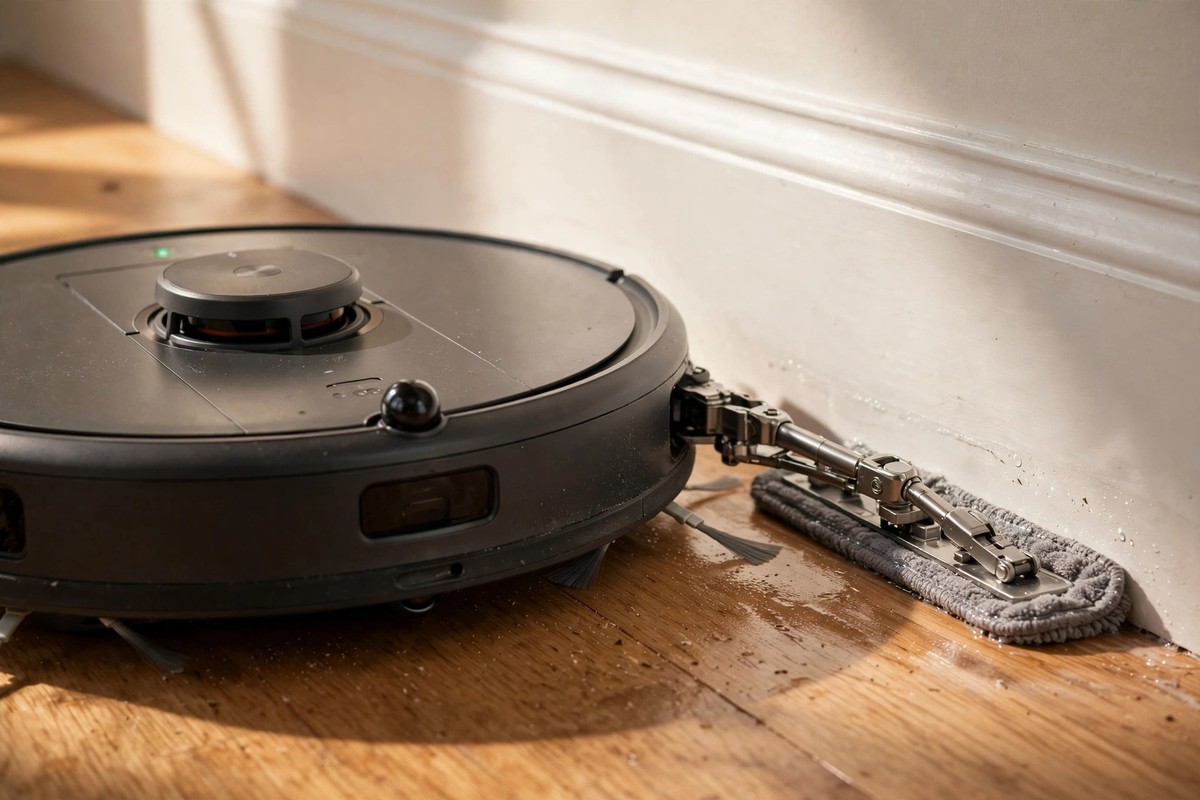
Roborock is not weak here: its sonic mopping vibrates pads thousands of times per minute and is excellent on dried stains, and the Qrevo 2 Pro has a clever trick of its own, leaving its mops in the dock before it cleans carpeted rooms so damp pads never touch your rugs. But for kitchens, tiled floors and sealed grout, Dreame’s more aggressive, wider-reaching mopping hardware is the stronger system in 2026.
Round 2: Obstacle Avoidance and Navigation (Roborock Wins)
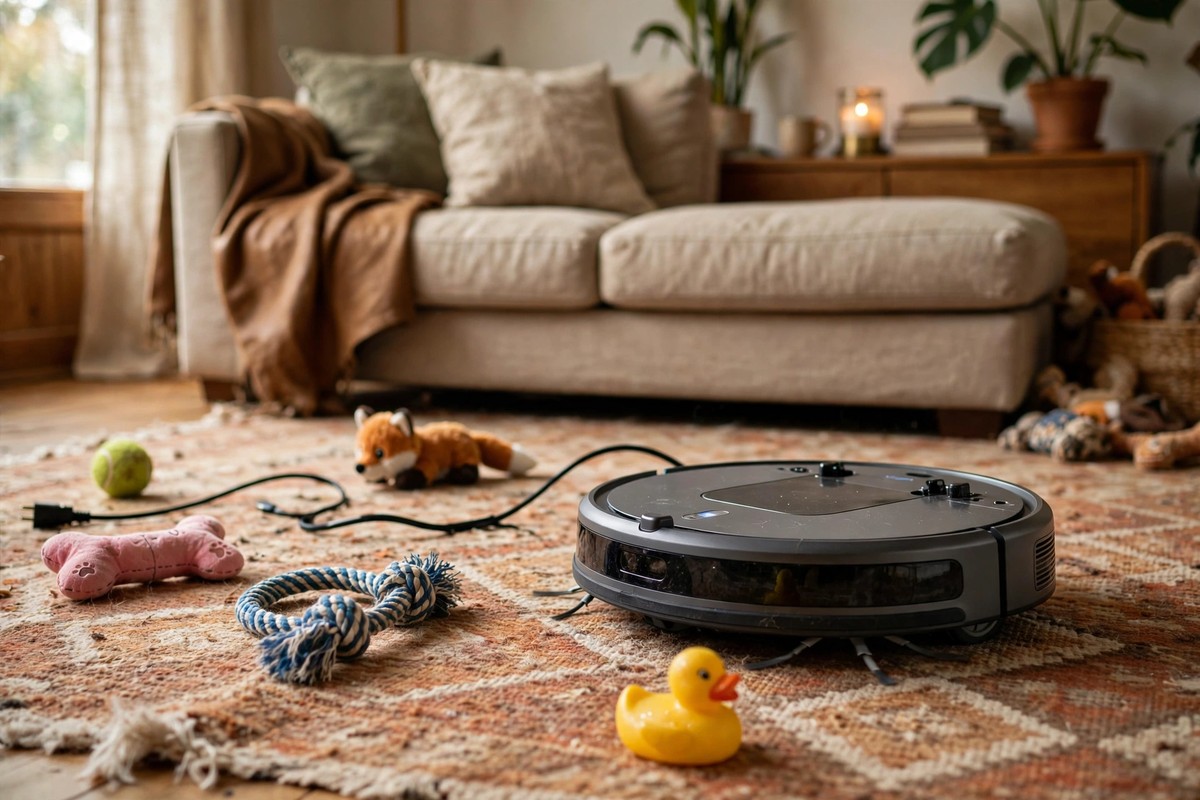
Roborock wins this round by a distance. Its structured-light and camera systems consistently avoid the dark cables, socks, pet toys and shoe laces that strand lesser robots, which matters enormously if you schedule cleans while you are out. Independent comparisons in 2026 keep landing on the same point: Roborock’s navigation feels more predictable and needs fewer rescues in cluttered homes.
Dreame’s dual-camera systems are advanced on paper and have improved a lot, but they remain less predictable around small objects and complex spaces. If your floors are regularly scattered with the evidence of kids or pets, Roborock’s avoidance consistency is the single most valuable feature in this comparison.
Round 3: App, Voice Control and Smart Home Ecosystems (Roborock Edges It)
The Roborock app remains the most polished in the category: map editing is intuitive, room-by-room scheduling with different suction levels works as described, and the 3D map view genuinely helps spot coverage gaps. Dreame’s app has improved significantly and offers deeper customisation, but it can feel busier and firmware updates have occasionally caused mapping hiccups.
On ecosystems, Roborock has the clearer edge right now. The Qrevo 2 Pro works with Matter, Apple Home, SmartThings, Alexa, Google Home and Home Assistant, which makes it the natural pick for an Apple Home or Matter household. Dreame typically covers Alexa, Google Home and Home Assistant, with Matter arriving via over-the-air updates on some models, so confirm the firmware situation for your exact model and region before buying. New to the standard? Our Matter vs Thread explainer covers what it means for smart-home kit. Voice announcements and cleaning routines work through Alexa too, and our Echo Hub vs Echo Show 8 comparison breaks down which display hub suits that job.
Round 4: Value at Each Price Tier (Dreame Wins Below $600)
Under $300, Dreame simply offers more machine: models like the D9 Max bring LiDAR mapping at prices where Roborock has nothing comparable. In the $300 to $500 range, the L10s Ultra Gen 2 (roughly $380 as of October 2026) gives you a self-washing mop dock and strong suction for less than Roborock’s S8 Pro Ultra (roughly $449), though Roborock counters with better avoidance and the better app. Between $500 and $700, the D30 Ultra at roughly $540 with 25,000 Pa and a 3-year warranty is the better-value package than the Qrevo 2 Pro at roughly $650.
Above $700, the story flips. Roborock’s premium flagships like the Saros 10R and Saros Z70 justify their prices with obstacle-avoidance precision and hardware refinement that Dreame cannot fully match yet. Sale events can change this: when a Dreame flagship is heavily discounted, its mopping and feature depth become much easier to justify, so always compare live prices before ordering.
Round 5: Warranty and Long-Term Support (Split Decision)
Here is the comparison almost nobody covers. Dreame ships some 2026 models, including the D30 Ultra, with a 3-year warranty against Roborock’s typical 1-year cover. On a machine this complex, with sensors, pumps and stations that all wear out eventually, two extra years of cover is a real financial difference.
Roborock counters with the longer track record: it has been in the premium robot-vacuum market longer, replacement parts (brushes, filters, dock bags) are widely available and reasonably priced, and its support team has a documented habit of replacing failed components within the first two years. Dreame’s support has improved considerably since 2023, but if you buy Dreame, read the warranty terms for your exact retailer carefully before purchase. Neither brand needs a subscription for core cleaning and mapping.
Conclusion
So who wins the Roborock vs Dreame robot vacuum 2026 debate? Dreame is the better buy if mopping matters most, your budget sits under roughly $600, or you want the strongest specs per pound: its longer warranties and extendable-reach hardware are genuinely ahead right now. Roborock is the better buy if obstacle avoidance, app polish, smart-home reach or proven long-term support matter most, and it remains the safer flagship choice above $600. Dreame’s rise to global market leader is real, but market share is not a cleaning report: match the brand’s strengths to your floors, your pets and your budget, and you will buy the right robot either way. Building a fuller setup around it? Browse our best smart home devices for modern living for what to connect next.
Frequently Asked Questions
Which brand wins the Roborock vs Dreame robot vacuum 2026 comparison overall?
There is no single winner. Roborock wins on obstacle avoidance, app polish, smart-home ecosystem reach and proven long-term support. Dreame wins on mopping performance, value below $600, suction-per-dollar and warranty length on some models. Choose by your priorities, not the brand badge.
Does Dreame becoming the global market leader make it the safer buy?
Not automatically. The Q1 2026 IDC data reflects strong sales, much of it in the value tiers where Dreame undercuts rivals, but market share is not the same as reliability or support quality. Both brands are well established in the UK and US; check the warranty terms for your exact model and retailer, and weigh Roborock’s longer parts-and-support track record against Dreame’s longer warranty periods.
Is higher Pa suction worth paying extra for?
Usually not on its own. Above roughly 6,000 Pa there is little measurable difference on hard floors: what matters is brush design, navigation passes, edge reach and how the mop handles wet cleaning. Suction figures matter more on thick carpet and for embedded pet hair. In 2026, reach and mopping hardware are the bigger differentiators, so never let the Pa number decide the purchase by itself.
Do I need Matter support on a robot vacuum?
Only if your smart home runs on Apple Home, SmartThings or another Matter-based setup. The Roborock Qrevo 2 Pro supports Matter now, while Dreame is rolling it out via updates on some models. Matter support is a tie-breaker, not a deal-maker: buy for the cleaning and app experience available today, not a firmware promise.
Which brand is better for pet owners?
Roborock has the edge for most pet homes because its obstacle avoidance handles toys, bowls and unpredictable clutter with fewer interruptions, which matters when hair and mess accumulate fast. Dreame is competitive on pickup thanks to strong anti-tangle brush systems and aggressive mopping. Either way, plan to inspect brushes and empty the dock regularly: no robot eliminates pet-hair maintenance entirely.