

Choosing the best smart smoke and CO detector 2026 has become a different job this year. Google has stopped making the Nest Protect, the alarm that topped nearly every roundup for a decade, and First Alert’s SC5 has stepped in as its official successor. We worked through the current lineups, October 2026 prices, certifications and smart-home fit to find what actually replaces it, with no hands-on lab testing claimed.
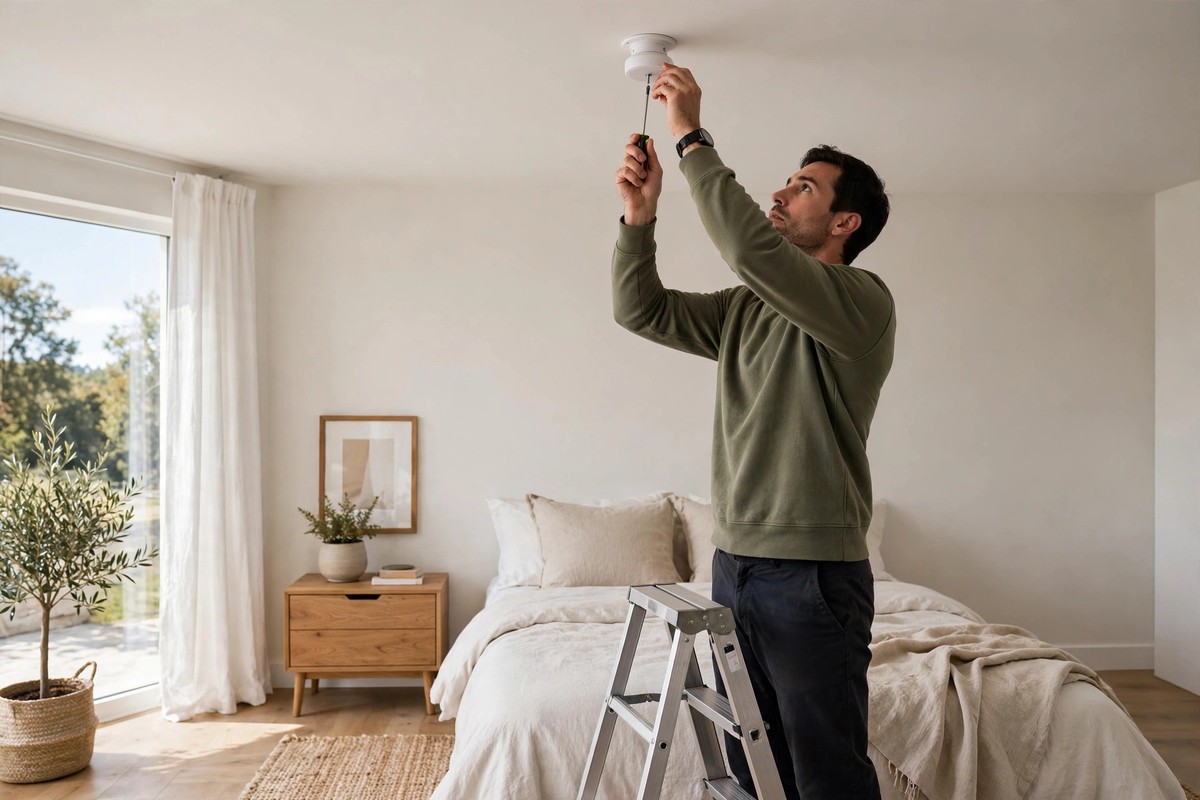
Best Smart Smoke and CO Detector 2026: The Short Answer
If you want one answer: buy the First Alert SC5 if you live in the Google Home world, the Kidde Smart Smoke + CO Alarm if you want strong Wi-Fi alerts at a lower price, the First Alert Z-Wave Plus if you already run a smart hub, an X-Sense Wi-Fi combo if you need a fit-and-forget battery unit, or the Kidde RemoteLync Monitor if your Wi-Fi is unreliable. Every pick below detects both smoke and carbon monoxide, which a smoke-only alarm cannot do.
| Pick | Model | Price (Oct 2026) | Power | Smart platform |
|---|---|---|---|---|
| Best overall successor | First Alert SC5 | roughly $128 to $150 | Hardwired or battery | Google Home (Wi-Fi) |
| Best Wi-Fi value | Kidde Smart Smoke + CO Alarm | roughly $74 to $79 | Hardwired, AA backup | Kidde app (Wi-Fi) |
| Best hub-based budget | First Alert Z-Wave Plus | roughly $58 | Battery | Z-Wave (works with Ring) |
| Best battery fit-and-forget | X-Sense Wi-Fi combo | roughly $86 to $90 | 10-year sealed battery | X-Sense app (Wi-Fi) |
| Best without Wi-Fi | Kidde RemoteLync Monitor | roughly $69 plus cellular plan | 10-year sealed battery | Cellular (SMS alerts) |
Prices are US figures and move with sales, so treat them as an October 2026 snapshot. UK pricing roughly tracks in the same band in pounds, but stock and prices shift often, so always check your retailer before buying.
1. First Alert SC5: The Official Nest Protect Successor
The SC5 is the pick most Nest Protect owners should look at first. First Alert builds it under the Google Home banner, it manages your alarms in the Google Home app, and it can wirelessly interconnect with Nest Protect units you already own, which makes a gradual swap painless instead of an all-at-once rewiring job.
It meets the UL 217 9th edition standard, the latest US smoke-alarm benchmark for faster detection of modern furnishing fires with fewer cooking false alarms, and it carries a large, easy-to-press physical hush button. Voice alerts name the room and the threat. The trade-offs are real: it has no Matter support, so it talks to Google Home and not much else, and it drops two beloved Nest Protect extras, the calm pre-alarm “heads-up” warning and the motion night light. One independent review also noted phone notifications arriving around 45 seconds after the alarm, so the local siren still does the heavy lifting. If you want the closest thing to a like-for-like Nest Protect replacement, this is it. Wondering how the standards fit together? Our Matter vs Thread explainer covers what Matter support means for smart-home kit.
2. Kidde Smart Smoke + CO Alarm: Best Wi-Fi Value
Kidde’s smart hardwired alarm does most of what the SC5 does for roughly half the money. You get immediate phone alerts, voice warnings that name the location, low-battery and offline warnings in the app, and an end-of-life notice so a dying sensor never goes quietly unnoticed.
Its cleverest trick is interconnection: it can link with compatible non-smart hardwired Kidde alarms, up to 24 units in one network, so one smart unit can effectively give your whole existing wired system phone alerts. It is built to the UL 217 9th edition standard too. The gripes are minor but worth knowing: backup power comes from replaceable AA batteries rather than a sealed cell, and the physical hush button is small, so you will usually reach for the app instead. If your home already has Kidde wiring, this is the simplest upgrade on the list.
3. First Alert Z-Wave Plus: Best Budget Pick for Hub Households
At roughly $58, the Z-Wave Plus is the cheapest genuinely smart combo alarm worth buying. It talks Z-Wave rather than Wi-Fi, which means it needs a hub, but it pairs cleanly with Ring Alarm and other Z-Wave controllers, so a hub household gets phone alerts and automation triggers for very little money.
It is certified to both UL 217 (smoke) and UL 2034 (CO), the two standards that matter. The catch is exactly what you would expect at this price: no voice location alerts, no Google Home or Alexa native app of its own, and you are dependent on your hub being online. If you already run Ring, check whether Ring is worth it without a subscription to see what you get at each tier, then this alarm slots straight into that system.
4. X-Sense Wi-Fi Combo: Best Battery Fit-and-Forget
For renters and anyone who cannot touch the wiring, the X-Sense Wi-Fi combo is the strongest battery option. A sealed 10-year lithium battery means no battery changes for the life of the unit, a colour-coded digital display shows status at a glance, and Wi-Fi sends phone alerts when smoke or CO is detected.
Voice alerts announce the type of danger, which beats a mystery siren. Two caveats: the units generally do not wirelessly interconnect with each other, so whole-home coverage means buying enough units and relying on hearing each siren, and certification varies by model, so check for the UL or EN marking on the exact unit you buy before ordering. Renters pairing this with other no-wiring upgrades should also see our best smart locks for renters.
5. Kidde RemoteLync Monitor: Best for Homes Without Reliable Wi-Fi
Every Wi-Fi alarm above goes quiet on your phone the moment the internet drops. The RemoteLync Monitor sidesteps that with cellular connectivity: it texts alerts to multiple contacts with no Wi-Fi and no app required, backed by a 10-year sealed battery.
That makes it the standout for holiday homes, rental properties and rural houses where the router is the weak link. The price is roughly $69, but the cellular monitoring plan adds about $5 to $10 a month, so the lifetime cost catches up with pricier Wi-Fi models over a few years. It is a specialist tool, but for an unoccupied property it is arguably the safest option on this list.
Hardwired, Battery or Cellular: Which Power Type Fits Your Home?
Hardwired alarms draw mains power with battery backup and interconnect most reliably, which is why building codes favour them. Choose hardwired if you are replacing existing wired alarms, as with the SC5 or the Kidde smart alarm.
Battery alarms install anywhere with a drill and a bracket, ideal for renters and older homes. Sealed 10-year batteries, as on the X-Sense and RemoteLync, remove the annual battery ritual entirely. Just note that wireless interconnection between battery units varies by brand.
Cellular alarms like the RemoteLync trade a monthly fee for alerts that survive internet outages. Pick one for a second home or anywhere the Wi-Fi cannot be trusted.
Certifications to Look For: UL and EN Standards
In the US, look for UL 217 for smoke detection (the 9th edition is the current benchmark) and UL 2034 for carbon monoxide. In the UK and EU, the equivalents are EN 14604 for smoke alarms and EN 50291 for CO alarms. An alarm that meets the current edition of these standards has been tested against modern furnishing fires and nuisance resistance, which is exactly what cheap unlisted alarms skip. If you heat with gas, note that smoke and CO alarms do not detect a natural gas leak: that needs a separate certified gas detector.
Where to Put Them
The manufacturer placement guidance quoting the NFPA recommends an alarm on every level of the home, inside every bedroom, and outside each sleeping area, with units at least 10 feet from cooking appliances to cut false alarms. Interconnected alarms, wired or wireless, matter more than any single smart feature: when one sounds, they all sound.

Conclusion
The best smart smoke and CO detector 2026 for most buyers is the First Alert SC5, because it is the official Nest Protect successor and the simplest drop-in for Google Home households. The Kidde Smart Smoke + CO Alarm is the value pick for wired homes, the Z-Wave Plus is the budget route for hub owners, the X-Sense combo suits renters who need sealed-battery simplicity, and the RemoteLync Monitor covers homes where Wi-Fi cannot be trusted. Whichever you choose, buy combo smoke-and-CO units, interconnect them, and check the certification marking. Pairing them with the rest of your setup? Browse our best smart home devices for modern living for what to connect next.
Frequently Asked Questions
What is the best smart smoke and CO detector 2026 now that Nest Protect is discontinued?
The First Alert SC5 is the closest direct replacement: First Alert presents it as the official successor, it works in the Google Home app, and it can interconnect with Nest Protect units you already own. If you are not tied to Google Home, the Kidde Smart Smoke + CO Alarm offers similar smarts for less money, and hub owners can save more with the First Alert Z-Wave Plus.
Is the Google Nest Protect really discontinued?
Yes, according to reporting from autumn 2026, Google has stopped making the Nest Protect. Existing units keep working until their end of life (smoke alarms must be replaced after about 10 years anyway), but new buyers should choose a current model like the SC5 rather than hunting old stock.
Will the First Alert SC5 work with my existing Nest Protect alarms?
Yes. The SC5 can wirelessly interconnect with legacy Nest Protect devices, so alarms you already own will sound together with the new unit. That lets you replace ageing Nest Protects one at a time instead of rewiring the whole house in one go.
Do smart smoke detectors still work if the Wi-Fi or power fails?
The local siren always works: every smart alarm on this list sounds its loud on-device alarm during an outage, since that is the life-safety core. What you lose without Wi-Fi is the phone notification. Hardwired models keep sounding on battery backup, and the Kidde RemoteLync Monitor goes further by sending cellular text alerts with no Wi-Fi at all, which is why it suits holiday homes.
Should I buy a combo smoke-and-CO alarm or separate detectors?
A combo unit is the simpler and usually cheaper choice for most rooms: one device, one app, one mounting point, protecting against both fire and carbon monoxide. Separate detectors only make sense if you want CO sensing at a different height (CO mixes with air, so ceiling mounting is fine for combos) or you are adding CO coverage to rooms that already have good smoke alarms. Every pick in this guide is a combo unit.