
Philips Hue vs Govee smart lights is the question everyone asks before buying their first colour setup. Hue is the premium veteran: a Bridge-based Zigbee system with the best colour accuracy and the deepest smart home support. Govee is the budget disruptor: Wi-Fi-direct bulbs and strips with dazzling effects at a fraction of the price. Here is how they compare on price, colour quality, apps, Matter support and reliability, so you buy right the first time.
Philips Hue vs Govee Smart Lights: The Quick Verdict
Buy Philips Hue if you want the most reliable lighting system you can build on for years: the best colour accuracy, smooth dimming, local control and full Apple Home support. Buy Govee if you want maximum colour and fun for minimum money: vibrant effects, music sync and gaming glow at prices Hue cannot touch. Many homes sensibly end up with both: Hue for the lights they use every day, Govee for the party corners.
| Factor | Philips Hue | Govee |
|---|---|---|
| Typical bulb price | $45-55 per colour bulb | $20-30 per multi-pack (around $8 a bulb in a 4-pack) |
| Hub needed | Yes, the Hue Bridge (~$60) for the full experience | No, everything connects over Wi-Fi direct |
| Colour tech | 16 million colours, 50,000 shades of white, superb accuracy | Vivid RGBIC gradients, colour purity slightly behind Hue |
| Light strips | Lightstrip Plus base kit ~$88; pro-grade options like OmniGlow | RGBIC strips ~$89 for longer runs; Neon RGBIC tubes |
| Outdoor range | Outdoor lightstrip ~$179; Calla bollards; rock solid in cold | Outdoor strips from ~$49; decent weatherproofing, app hiccups |
| Smart home support | Alexa, Google, Apple Home, Matter; huge accessory range | Alexa and Google; no native Apple Home on bulbs; Matter limited |
| Best for | Whole-home systems, daily drivers, Apple households | Gaming rooms, movie nights, budget makeovers |
Price: The Real Cost of Ownership
Single-item prices make Govee look like the runaway winner, and on a per-unit basis it is. A single Hue colour bulb costs $45-55 while a whole multi-pack of Govee bulbs costs $20-30. But the honest comparison adds up a real room, because Hue asks for the Bridge (~$60) on top.
Price a five-bulb starter setup. Govee: two multi-packs, roughly $40-50 all in, no extras. Hue: five bulbs at $45-55 plus the $60 Bridge, so $285-335 before you hang a single strip. That is the tax for the premium system, and it stings less the more bulbs you add.
Light strips tell a similar story with a smaller gap. A Hue Lightstrip Plus base kit runs ~$88, while a longer Govee RGBIC strip costs ~$89, though per-metre pricing stays kinder to Govee ($12-25 per metre vs $25-40 for Hue). Outdoors, the gap blows open again: a Govee outdoor strip starts near $49 against ~$179 for the Hue outdoor lightstrip. UK readers should check current GBP listings on the Philips Hue official site and Amazon UK, as prices move around sales seasons.
Colour Quality and White Light
This is where Hue earns its premium. Reviewers consistently rate Hue’s colour accuracy as excellent, with smooth gradients and, crucially, beautiful tunable white light. That matters more than it sounds: most people run warm-to-cool white light about 95% of the time and party colours the other 5%. Hue’s dedicated white LEDs produce the most natural-looking whites on the market.
Govee’s colours are vivid and exciting, especially its RGBIC strips that show multiple colours at once for gradient effects. But the white light is mixed from red, green and blue rather than dedicated white LEDs, so it can lean slightly blue or pink. For a gaming backdrop that is invisible; for a reading lamp it is noticeable.
Setup, Connectivity and Your Wi-Fi
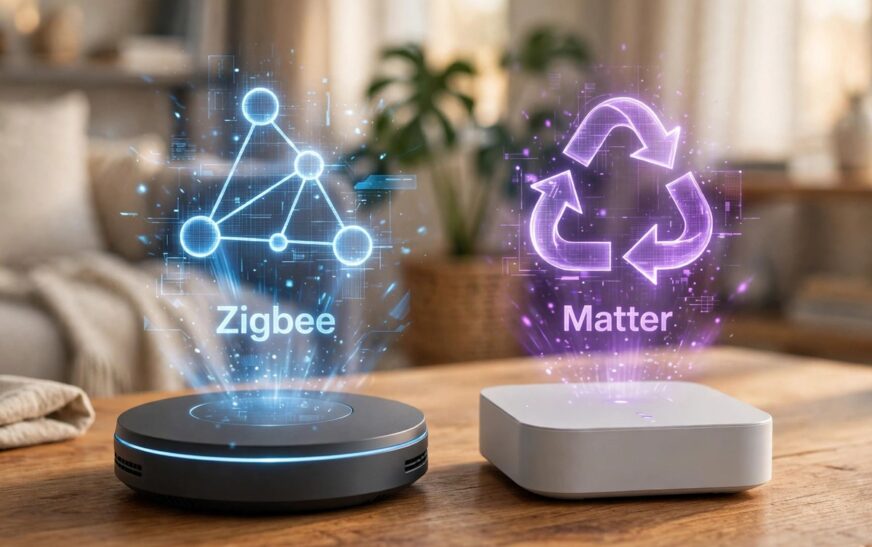
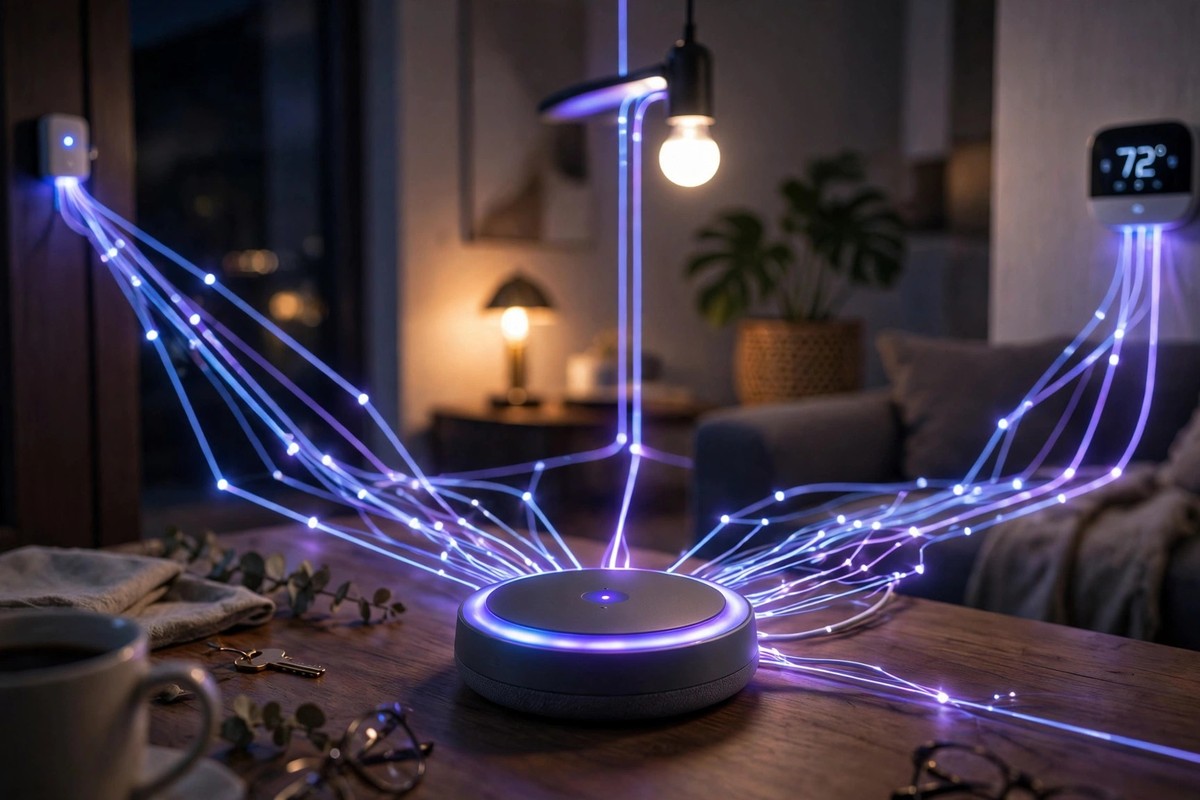
The structural difference is the biggest real-world divider. Govee connects straight to your 2.4GHz Wi-Fi: screw in, open the app, done. It is the easiest onboarding in smart lighting. Hue works over Bluetooth out of the box, but the full experience comes only with the Hue Bridge, which moves your bulbs onto their own dedicated Zigbee mesh.
That Bridge is both a cost and a superpower. Every Govee bulb is another device competing for your router’s attention, which matters once you pass a dozen or so gadgets on a busy 2.4GHz band. Hue bulbs stop caring what your Wi-Fi is doing, because they talk to the Bridge instead. In gadget-dense homes, that is exactly why Hue feels more dependable: commands land first time instead of needing a second tap.
Apps, Scenes and Music Sync
Govee wins the fun column. The Govee Home app is packed with animated effects, preset scenes and genuinely entertaining music sync modes, plus camera-based TV backlighting that reacts to what is on screen, all at a fraction of what a Hue entertainment setup costs. Gamers and party hosts get the most spectacle per pound here.
The trade-off is polish. The Govee app often feels busy, slow or crash-prone, with scenes occasionally vanishing and connections dropping under load. The Hue app is calmer and more predictable: fewer effects, but scenes, schedules and routines that work every time. For automations tied to motion sensors or sunrise and sunset, that reliability is the whole point.
Matter, HomeKit and Smart Home Integration
Hue is the deeper smart home citizen. It supports Alexa, Google Assistant, Apple Home and Matter, and its accessory ecosystem, physical dimmer switches, remotes, motion sensors, third-party apps, is the largest in lighting. Our Matter vs Thread explainer covers how these standards fit together.
Govee is more limited. Its bulbs work with Alexa and Google, but there is no native Apple Home support on the bulbs, which is a hard stop for HomeKit households. Matter support on Govee remains limited, with newer models promised but not broadly delivered. The most important practical difference: Hue works locally through the Bridge, so basic control keeps working when your internet drops. Govee needs internet for its smart features, so a dead connection means dumb bulbs.
Reliability, Longevity and Privacy
Over time the gap widens. Six-month outdoor testing by reviewers found Hue’s colour accuracy drifting only about 3% while Govee’s drifted roughly 12%, with reds shifting toward orange and whites yellowing slightly. Govee strips have also shown Wi-Fi disconnections in extreme cold, where Hue held steady. Govee’s counter is modular repair, replacing a 6-inch section for around $12, versus a whole Hue strip, though Hue fails far less often.
On privacy, the connectivity models differ: Hue’s Bridge keeps much of your lighting traffic on your local network, while Govee’s cloud-based system sends more data offsite. Either way, keep firmware updated and use a strong account password. See our smart home security guide for the full checklist.
Which Should You Pick?
Choose Philips Hue for the lights you touch every day: the living room, bedroom and kitchen. The colour accuracy, smooth dimming, local control and rock-solid app make it the system that blends into your home. It is also the better base for growing into a full smart home with sensors, switches and automations.
Choose Govee for colour, spectacle and scale: gaming desks, TV backlights, party lighting and rooms where you want a lot of light for little money. It is the easiest win for renters too, since bulbs and adhesive strips go in with zero wiring; see our renter-friendly smart home picks for more no-damage upgrades.
And if you are building a whole budget smart home beyond lighting, read our Aqara vs SwitchBot comparison for the ecosystems those brands offer at similar prices.
Conclusion
The Philips Hue vs Govee smart lights decision comes down to what you value most. Hue is the premium system that just works: the best colour and white light, the deepest smart home integration, local control and years of dependable service, at a price that asks for the Bridge upfront. Govee is the budget disruptor: dazzling RGBIC effects, music sync and TV glow for a fraction of the money, with an app and cloud dependence that ask for some patience. Buy Hue for the lights you rely on and Govee for the lights that entertain, and you will not regret either choice.
Frequently Asked Questions
Does Govee work with Apple HomeKit?
Not natively on its smart bulbs. Govee bulbs pair with Alexa and Google Assistant but lack native Apple Home support, so HomeKit households should choose Philips Hue.
Do I need the Philips Hue Bridge to use Hue lights?
Not for basic Bluetooth control near the bulb, but you need the Bridge (~$60) for the full experience: remote access, automations, voice control and the local Zigbee mesh that makes Hue so reliable. Without it, you are missing most of what the premium price buys.
Can I mix Philips Hue and Govee smart lights in one home?
Yes, through Alexa or Google Assistant. Both brands work with those assistants, so you can control all your lights with one voice command. You cannot manage both in a single brand app, so keep Hue for daily lights and Govee for accent lighting rather than splitting one room across brands.
Do Govee smart lights work if the internet goes down?
Govee needs internet for app control, scenes and voice commands, so an outage leaves you with basic wall-switch control. Philips Hue keeps working locally through the Bridge, a meaningful advantage in areas with flaky connections.
Philips Hue vs Govee smart lights: which is cheaper for a whole house?
Govee, by a wide margin. A five-bulb Govee setup costs roughly $40-50 with no hub, while five Hue bulbs plus the Bridge runs $285-335. Hue only starts to narrow the gap once you scale past a dozen devices and the Bridge cost fades, but Govee stays cheaper at every room count.