

A smart home landlord rental property upgrade should protect the building first and impress tenants second. The best landlord upgrades are the ones that stop a leak before it ruins a floor, end lockout calls at midnight, and prove the alarms work on the day a tenancy begins. This guide covers five upgrades that fit that test, with real UK prices checked on 9 November 2026, and every one of them installs without rewiring the house.

Smart Home Landlord Rental Property: What Can You Install Without Rewiring?
Four of the five upgrades in this guide need no wiring at all. A smart lock replaces the existing handle and cylinder, leak sensors sit on the floor on batteries, a video doorbell runs on a rechargeable battery, and battery smoke and CO alarms screw to the ceiling. The fifth upgrade, a smart thermostat, is the exception. Its wireless thermostat is simple, but the receiver wires into the boiler, so that part needs a competent installer. Nothing here needs new cables in the walls, a new consumer unit, or chasing plaster. That matters for landlords, because rewiring means an electrician, a vacant property, and a bill that wipes out the saving the device was meant to make.
Which Smart Lock Actually Fits a UK Rental Door?
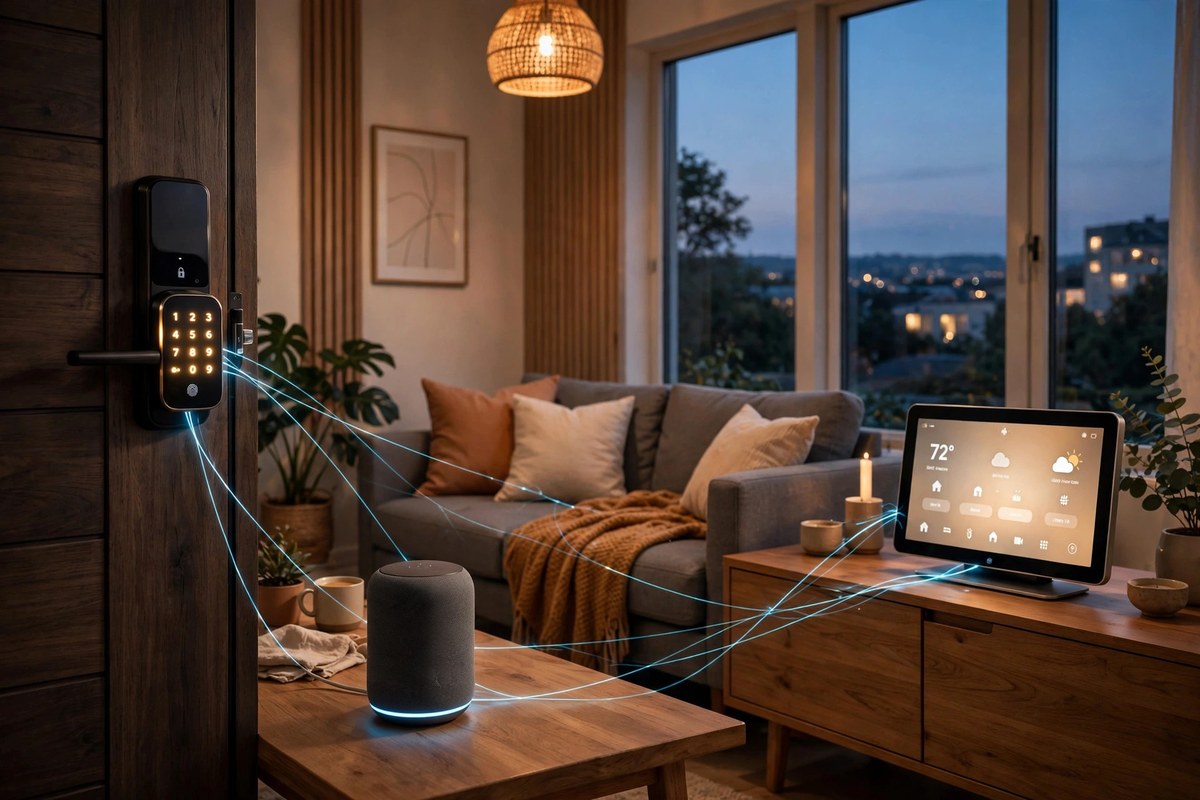
Start with the lock, because it pays for itself fastest. A smart lock ends rekeying between tenants, ends lockout calls, and lets you give a plumber a temporary code instead of driving across town with a key. But most US smart locks do not fit UK doors. Most UK front doors are uPVC with a lift-to-lock multipoint mechanism, where you lift the handle to engage the bolts and then turn a key. The lock built for that door is the Yale Conexis L2, and it costs £289.99 from Yale, or £400 if you want Yale to send someone to install it.
The Conexis L2 replaces the existing handle and Eurocylinder, runs on four AA batteries, and comes with the Yale Access Module and Wi-Fi Connect Bridge, so you get remote locking and unlocking out of the box. You can hand out unlimited virtual keys at no extra charge, set them as always, recurring or temporary, and give a cleaner a Tuesday-only window that stops working on its own. It carries a BSI IoT Kitemark, which means it has been tested against software attacks as well as physical force, and it works with Alexa and Google Home for lock status checks.
There is one limitation every landlord must understand before buying. The Conexis L2 cannot lock a lift-to-lock door for you, in person or remotely, because the handle must be lifted by a person to engage the multipoint bolts. If the tenant lifts the handle, the motor does the rest. If they do not, the door is only on the latch. Tell tenants this in writing when they move in, and keep a physical backup plan, because batteries die and Wi-Fi goes down. For a wider comparison of renter-friendly options, see our guide to the best smart lock for renters.
How Do Leak Sensors Stop the Most Expensive Rental Repair?
Water damage is the claim landlords fear most, because a slow leak under a sink can rot a floor for weeks before anyone notices. A leak sensor is a small battery puck that sits on the floor and screams, and phones you, the moment it touches water. The SwitchBot WiFi Water Sensor comes as a 3-pack for £29.99 on Amazon UK, down from £39.99, needs no hub, connects straight to 2.4 GHz Wi-Fi, and has a 100 dB alarm you can hear from another room. Each sensor is IP67 waterproof and comes with a 1 m sensing cable, so one sensor can guard the whole width under a sink.
Put one sensor under the kitchen sink, one behind the toilet at the supply line, and one under the washing machine connections. Add a fourth near the water heater if the property has one. That is the whole install: place the sensor, connect it to the app, test it with a wet cloth. A sensor cannot stop a leak on its own, so the value is in the alert. When your phone buzzes, call the tenant and tell them to turn off the stopcock, then book the plumber. Without the sensor, the first sign of trouble is often a stained ceiling in the flat below. If you want the full case for and against them, read our guide on whether a smart water leak detector is worth it.
Can a Smart Thermostat Work in a Rental Without Rewiring the House?
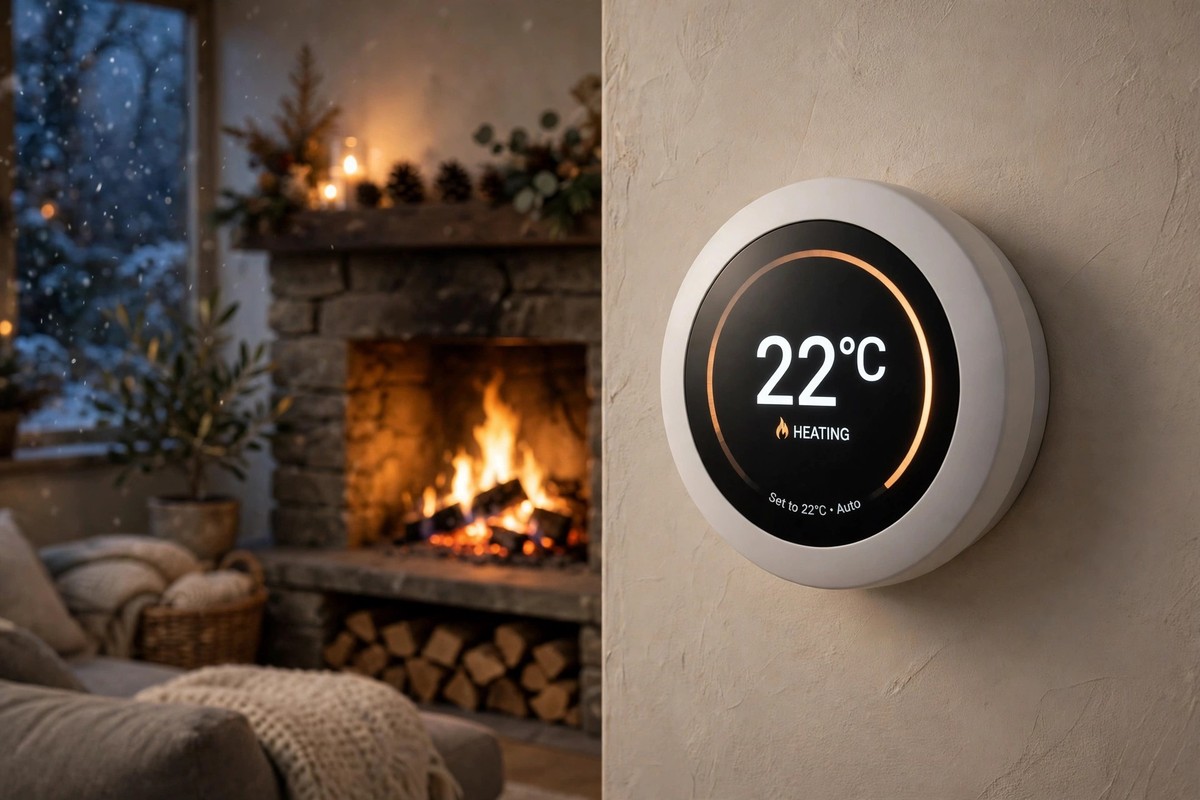
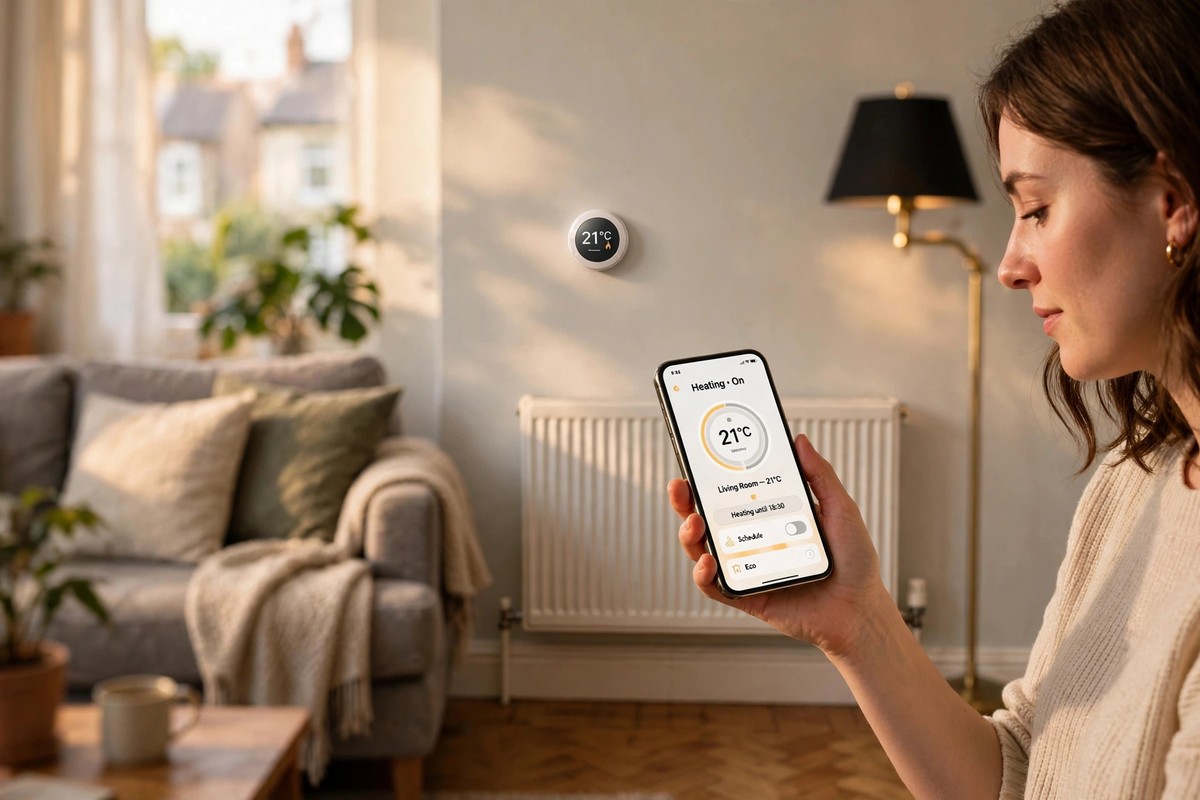
Yes, with one honest caveat. A smart thermostat does not need new wiring in the walls, but its receiver does wire into the boiler, so a competent installer should fit it. Budget for that. The Hive Thermostat Mini starter kit, thermostat plus hub plus receiver, costs £119, and professional installation typically costs around £100. That is still the cheapest way to get remote heating control, frost protection, and a minimum temperature you can set from your phone.
For a landlord, the minimum temperature is the feature that matters. Set a frost-protection floor in the app, and the heating comes on even if a tenant turns it down or switches it off while they are away, which is what stops frozen pipes in an empty property over Christmas. The Hive Mini works with the vast majority of UK gas and LPG combi, system and heat-only boilers, and it covers heating and hot water with frost protection. It needs the Hive Hub for app control, which is why you should buy the starter kit rather than the thermostat on its own. Tell the tenant the minimum temperature is set for frost protection, not to control how warm they keep the flat, and put that in writing. For a full comparison before you buy, see our guide to the best smart thermostat in the UK.
What Does the Law Require on Smoke and CO Alarms?
This is the one upgrade that is not optional. In England, landlords must fit a smoke alarm on every storey used as living accommodation, and a carbon monoxide alarm in any room used as living accommodation that contains a fixed combustion appliance other than a gas cooker. You must check every alarm is in proper working order on the day a new tenancy begins, and repair or replace a faulty alarm as soon as reasonably practicable once a tenant reports it. A council can serve a remedial notice, and failing to comply with that notice can lead to a fine of up to £5,000. Scotland, Wales and Northern Ireland have their own rules, so check the law where your property actually sits. The GOV.UK explanatory booklet for landlords sets out the duties in full.
A smart alarm meets the same legal duty and adds the one thing a standard alarm cannot do: tell you about a problem when the property is empty. The FireAngel Pro Connected battery-powered smoke alarm costs £60, has a 10-year sealed battery and Thermoptek multi-sensor technology, and its matching carbon monoxide alarm also costs £60. Phone alerts need the FireAngel Pro Connected Smart Gateway, which costs £65. Check stock before you order, because the battery smoke alarm was out of stock on FireAngel’s own site when we checked on 9 November 2026. If it is unavailable, the mains-powered version is £100, but that one needs an electrician to fit. For a full comparison of smart alarms, see our guide to the best smart smoke and CO detector.
Is a Video Doorbell Worth It on a Rental?
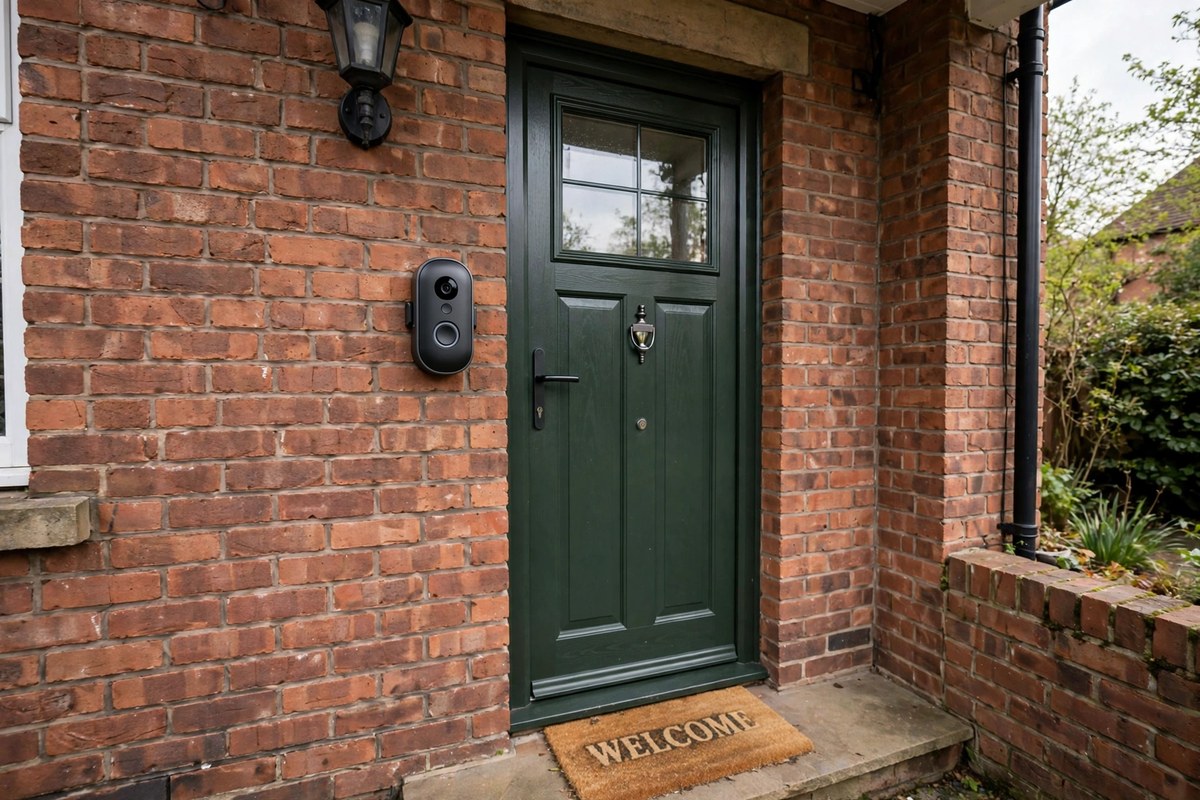
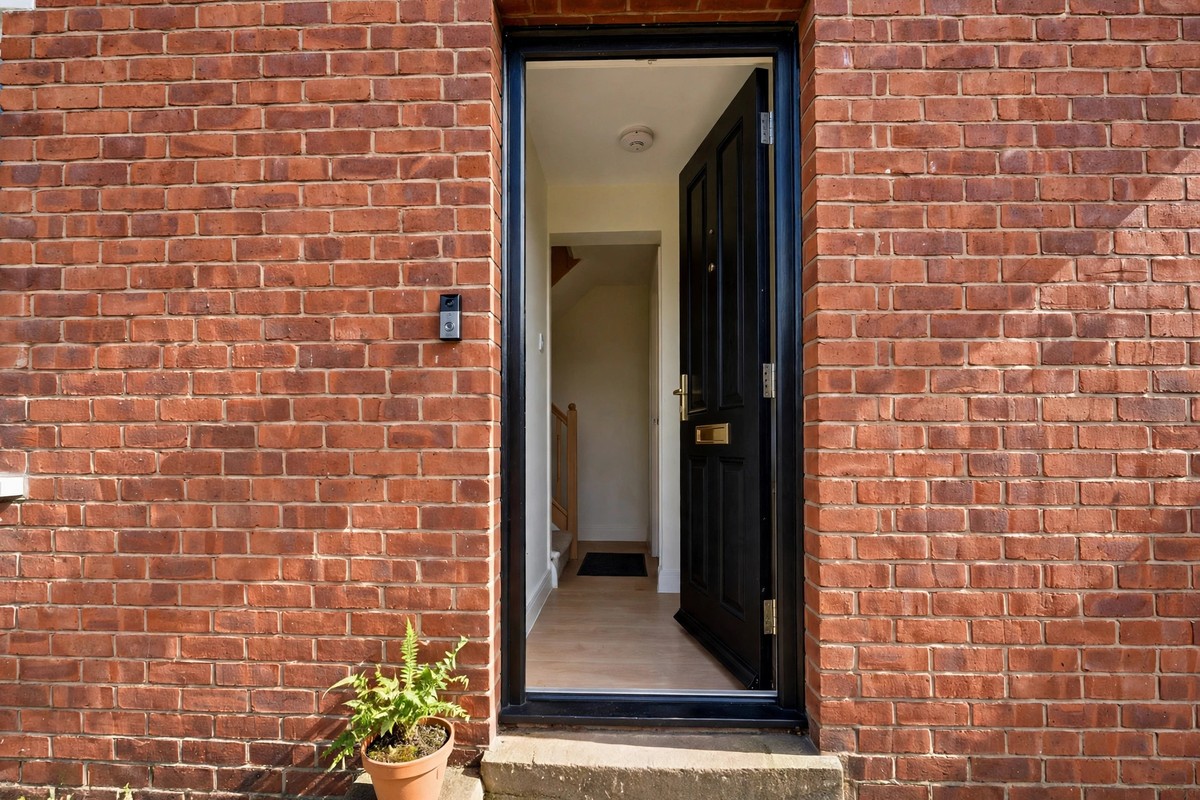
A battery video doorbell is worth it on a rental, but only on the front door, and only for the outside. The Ring Video Doorbell (4th Gen) costs around £89.99, runs on a rechargeable battery, and screws to the door frame, with a no-drill mount available if you do not want holes in the brickwork. Tenants can see who is at the door, take in parcels, and talk to a visitor from their phone. You get a record of who came to the property and when, which helps with disputed deliveries and missed contractors.
Two things to get right. First, video history needs a subscription. Ring Protect Basic costs £3.49 a month or £34.99 a year and covers one device. Without it you still get live view and motion alerts, but clips are not saved. Second, never put a camera inside an occupied rental unit. Cameras belong on the exterior and in shared common areas only, and tenants must be told about them in writing before they move in. A doorbell that films the street is a selling point. A camera in a living room is a legal problem.
What Should Landlords Skip?
Not every smart device belongs in a rental. Skip smart speakers, because they are the tenant’s choice and they raise privacy questions in a home you do not live in. Skip smart lighting throughout the unit, because tenants want their own lighting and smart bulbs tend to walk out at turnover. Skip robot vacuums, which are fun but not a landlord’s responsibility and will not survive a careless tenant. Skip complex home automation hubs, because every extra layer is another support call when something stops working. And skip smart appliances. A smart fridge does not reduce your costs or protect your property. Buy reliable, ordinary appliances and spend the money on the five upgrades above instead.
What Does It Cost? A Realistic Budget
Here is the full set for a typical one-bedroom flat, with prices checked on 9 November 2026:
| Upgrade | Product | Typical UK price |
|---|---|---|
| Smart lock | Yale Conexis L2 | £289.99 |
| Leak sensors | SwitchBot WiFi Water Sensor, 3-pack | £29.99 |
| Smart thermostat | Hive Thermostat Mini starter kit | £119.00 |
| Smoke and CO alarms | FireAngel Pro Connected smoke £60, CO £60, gateway £65 | £185.00 |
| Video doorbell | Ring Video Doorbell (4th Gen) | £89.99 |
The full set comes to £713.97, before installation. The thermostat install is the only labour cost to add, typically around £100. Nobody needs to buy it all at once. Phase one is the lock and the leak sensors at £319.98, because those two stop the most expensive problems. Phase two is the alarms at £185, because the law already requires alarms and the smart versions add remote alerts. Phase three is the thermostat and the doorbell at £208.99. Spread across three tenancies, that is a small cost against one avoided insurance claim or one month of void rent.
The Tenant Turnover Checklist
Smart devices only work if you reset them between tenants. Do this at every changeover, before the new tenant collects the keys. First, delete the old tenant’s codes, virtual keys and app access from the lock, then create a fresh code for the new tenant. Second, factory reset any device the tenant could have changed, and check the Wi-Fi password still matches the one your devices use. If the tenant changed the router password, your leak sensors and doorbell go silent, so put in the tenancy agreement that the Wi-Fi password for landlord devices must not be changed without telling you. Third, test every smoke and CO alarm on the day the tenancy begins, as the law requires, and write down that you did it. Fourth, check the lock batteries, the doorbell battery and the leak sensor batteries, and replace anything below half charge. Fifth, give the new tenant a one-page sheet listing every smart device in the property, what it does, and what data it collects. That sheet is what turns a smart home from a privacy worry into a selling point.
Conclusion
Smart home landlord rental property upgrades work when they are chosen like a landlord, not like a gadget fan. A Yale Conexis L2 ends rekeying and lockouts, SwitchBot leak sensors catch the damage that costs thousands, a Hive Mini stops frozen pipes, FireAngel smart alarms meet your legal duty and tell you when the property is empty, and a Ring doorbell watches the front door. All five install without rewiring the house, the full set costs £713.97, and the lock and leak sensors alone cost £319.98. Start there, add the rest in phases, and reset everything properly at every turnover.
Frequently Asked Questions
Can a landlord install a smart lock in a rental property?
Yes. For a smart home landlord rental property, the Yale Conexis L2 at £289.99 is the practical pick, because it is built for lift-to-lock multipoint uPVC doors. Remember its limit: the handle must still be lifted by a person to engage the bolts, so the lock cannot lock the door remotely on its own. Keep a physical backup, tell tenants how it works in writing, and change all codes and virtual keys at every turnover.
Do smart home upgrades in a rental need rewiring?
No, not the five in this guide. A smart lock, battery leak sensors, a battery video doorbell and battery smoke and CO alarms all install without new wiring. The one exception is a smart thermostat: the wireless thermostat is simple, but the receiver wires into the boiler, so have a competent installer fit that part. Budget around £100 for the install on top of the £119 Hive Mini starter kit.
Are cameras allowed inside a rental property?
No, never put a camera inside an occupied rental unit. Cameras belong on the exterior and in shared common areas only, such as an entrance hall or a laundry room. Tell tenants about every camera in writing before they move in, say what it records and who can view it, and remove any camera from a unit before a new tenant moves in.
Who pays for the Wi-Fi that smart home devices need?
Decide this before you install anything, and write it into the tenancy agreement. Most landlords leave the tenant to arrange broadband, but the landlord’s devices still need the Wi-Fi password to work. If the tenant changes the router password, your leak sensors, doorbell and thermostat go silent. Put a clause in the agreement saying the password for landlord devices must not be changed without telling you, and keep a note of which devices depend on it.
What smart home upgrade is most worth it for a landlord?
The smart lock, followed closely by leak sensors. The Yale Conexis L2 at £289.99 ends rekeying and lockout calls at every turnover, and the SwitchBot 3-pack at £29.99 is the cheapest insurance against water damage you can buy. Together they cost £319.98. Add the smoke and CO alarms next, because the law already requires them, then the thermostat and the doorbell.