
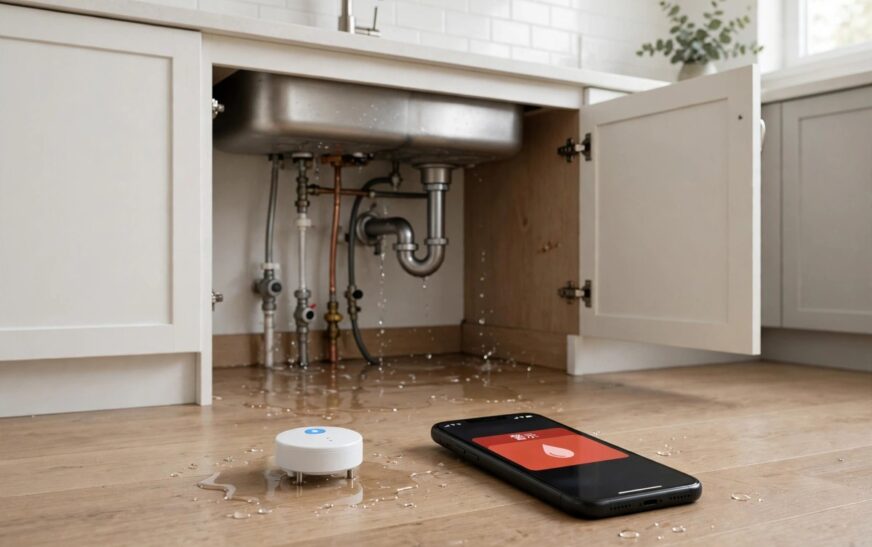
Is a smart water leak detector worth it for your home? For most homes, yes, because a small leak that runs for days can ruin floors, feed mould and cost far more to repair than a set of sensors. A smart water leak detector is a small sensor that sits where leaks start, under sinks, beside washing machines and near water heaters, and alerts your phone the moment it touches water. Some systems go further and shut off your water supply automatically. This guide compares the types, the real costs, the savings case and the best pick for each home, so you can decide without overspending.
Is a Smart Water Leak Detector Worth It? The Short Answer
Buy one if you are often away from home, live in a flat where a leak could damage a neighbour below, have older plumbing, or have appliances tucked into cupboards you rarely check. In those homes, early warning is the whole point: a phone alert while you are at work or on holiday can turn a flooded kitchen into a mop and a plumber visit.
Skip a whole home shutoff system for now if you live in a small, well maintained flat, check under your sinks regularly and are almost always home to hear an alarm. A single low cost spot sensor in the riskiest place still makes sense, because it costs little and needs no plumber. The expensive mistake is buying a full system and never placing the sensors where water actually goes.
Smart Water Leak Detector Types Compared
Competitors often blur these types together, but they do very different jobs. A sensor that only beeps cannot stop a burst pipe while you are away, and a flow monitor cannot tell you exactly which appliance is leaking. Pick the type that matches the risk you actually face.
| Type | Best for | Guide cost | What it cannot do |
|---|---|---|---|
| Spot sensor (puck) | Under sinks, toilets, washing machines | Lowest cost per sensor; a starter set is a modest one off buy | Only detects water that reaches it; it cannot shut off water |
| Cable sensor | Along water heater bases, basement walls, long pipe runs | Mid range; one cable covers a longer line than one puck | Needs a power point or hub nearby, depending on the model |
| Whole home flow monitor | Hidden leaks inside walls and slow drips you cannot see | Higher one off cost, plus a possible yearly app charge on some models | Usually alerts only; it does not shut off water by itself |
| Automatic shutoff system | Holiday homes, rentals, flats, and homes often left empty | Highest cost, and often needs a plumber to fit the valve | Can trigger a false shutoff if set too sensitively, so learn how to reset it |
All prices in this guide are approximate guides only, not live retail prices. Check the current price, and whether a hub or subscription is required, before you buy, because models and bundles change often.
Costs and Savings: The Honest Maths
A starter set of spot sensors is the cheapest way in, and it is usually enough for a flat or a small house. Cover the kitchen sink, the washing machine, the dishwasher and the bathroom first, then add the water heater and boiler. A hub based kit for a larger home costs more up front, but it brings longer range, longer battery life and sensors that still sound an alarm when the broadband drops.
A whole home flow monitor or an automatic shutoff valve is a bigger investment, especially once plumber fitting is added. It earns its keep in homes that are empty for long stretches, because it can catch a leak you would otherwise discover days later, or stop the flow entirely. For a home that is rarely empty, that extra spend is harder to justify.
The savings case rests on how expensive water damage is. Mercury Insurance cites the Insurance Information Institute figure that about one in 60 insured homes has a property damage claim caused by water damage or freezing. A single prevented incident can therefore pay for many years of sensors, but no sensor guarantees you will never have a claim. Slow leaks inside walls, leaks in places with no sensor, and a phone alert that nobody acts on can all still lead to damage.
On insurance, ask your own insurer before you buy, and do not assume a discount. Mercury Insurance reports a discount of up to 4.2 percent for eligible homeowners with qualifying devices such as whole home flow monitors or shutoff devices, as explained in its guide to how leak detection systems work, but that is a US insurer example and UK terms vary. Some UK insurers have supplied devices or offered help with escape of water risk, so it is worth a direct question: which devices qualify, and does the discount need a shutoff valve or just sensors?
Running costs are small but real. Budget for replacement batteries every year or two on battery sensors, check whether your chosen app charges a yearly fee, and remember that a plumber fitted valve may need occasional servicing. A system with no subscription and local alerts is cheaper to run, but check that its app still sends alerts when your phone is on silent or Do Not Disturb.
Where to Place Sensors First
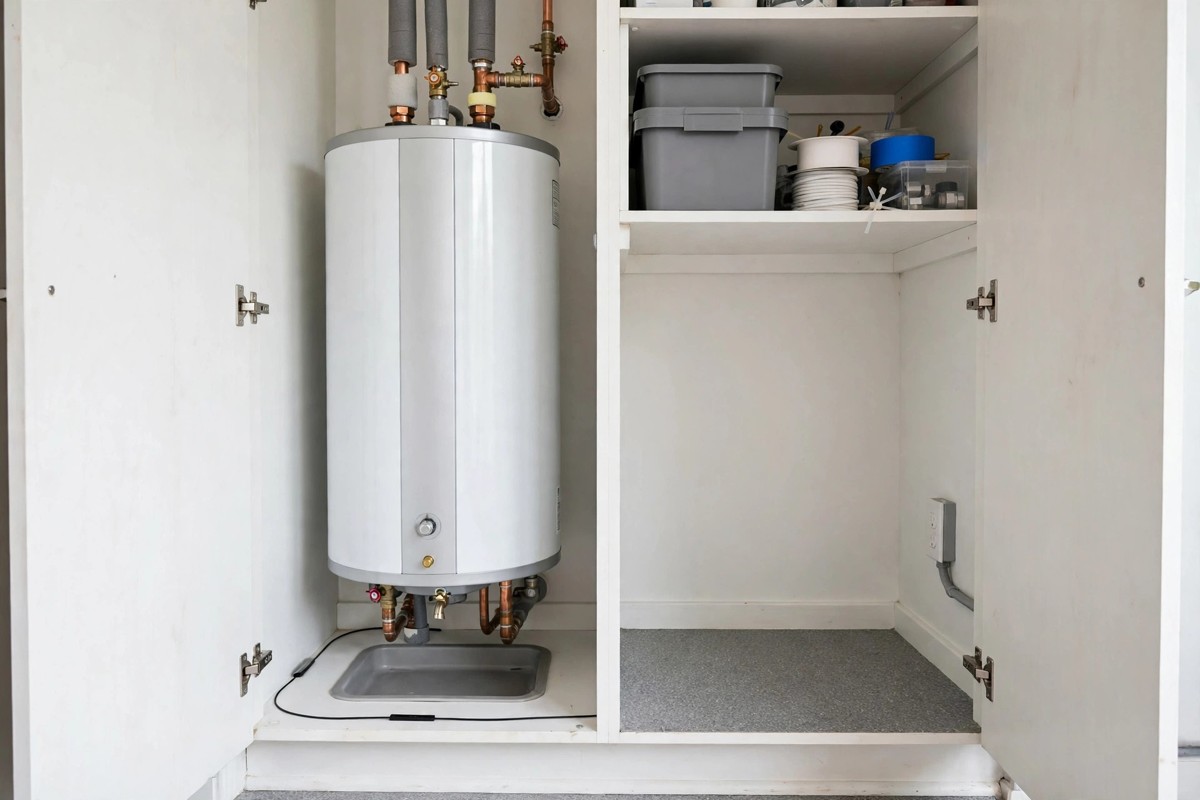
Start with the four places where most home leaks begin. Put one sensor under the kitchen sink, one behind the washing machine, one behind the dishwasher and one near the water heater or boiler. Then add the bathroom: under the basin, beside the toilet cistern and near the bath panel if you can reach it. In a house with a loft tank, add a sensor near the tank and near the stopcock.
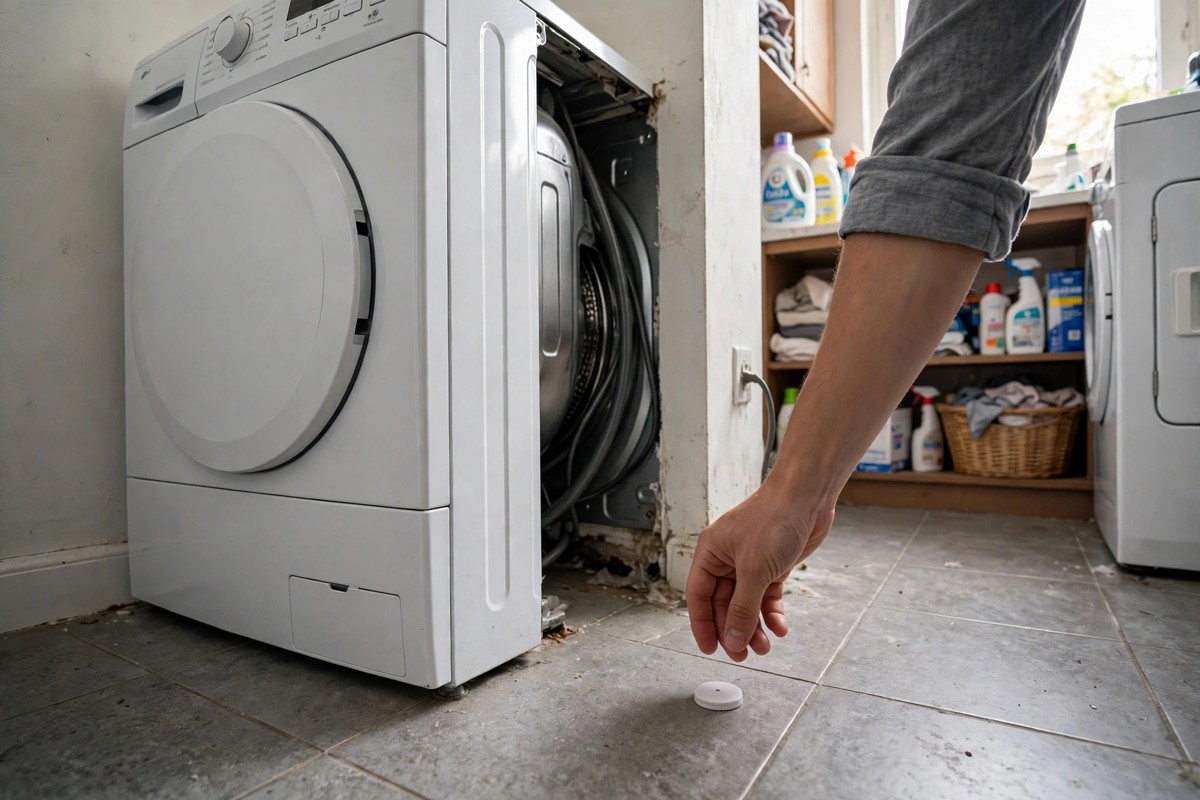
Place the sensor on the floor where water would pool, not on a shelf above the leak. If the floor slopes, put it on the low side. For a washing machine, slide the sensor just behind or beside the machine where a hose failure would first spread, and use a cable probe for tight gaps a puck cannot reach. Test every sensor after fitting by touching its contacts with a damp cloth, and repeat the test every few months.
Thread based sensors are worth considering if you already run a Matter smart home, because they use little power and keep working locally when broadband drops. Our Matter vs Thread explained guide lists which speakers and hubs already act as a Thread border router, so check that list before buying Thread sensors.
False Alarms, Outages and Alerts That Actually Work
This is where most competitor guides stop short, and where buyers get caught out. A sensor is only useful if the alert reaches a person who can act. Add a second person to app alerts, such as a partner or a trusted neighbour, and make sure at least one of you can turn off the water at the stopcock. Write down the stopcock location and share it with anyone who looks after your home.
False alarms usually come from splashes, steam, condensation or a sensor sitting in a puddle after mopping. Keep sensors out of direct shower spray, away from mop buckets and off floors that stay damp. If a sensor keeps alarming, move it a few centimetres, dry the contacts and check whether humidity, rather than a leak, is the cause. A flow monitor can also flag normal use, such as filling a bath or running the garden hose, so learn its settings before you trust every alert.
Plan for outages too. Wi-Fi sensors go quiet if the router loses power, unless they also sound a loud local alarm. Hub based sensors on Zigbee, Z-Wave or LoRa often keep alarming locally even without broadband, which is why they suit larger homes and outbuildings. Whatever system you buy, a loud local alarm matters: a phone alert alone helps nobody if you are asleep with your phone on silent.
Security matters as well. Use a unique password for the sensor app, turn on two factor authentication where offered, and keep firmware updated. Our guide to smart home security mistakes covers the account steps that apply to leak sensors just as much as to cameras and locks.

Best Picks for 2026 by Home Type
Small flat or rented home: a Wi-Fi spot sensor set with no hub. It is cheap, portable and moves with you, and it needs no drilling or plumbing. Pair it with a camera only if you want visual checks while away; our eufy vs Ring security camera system comparison explains the subscription trade offs if you add cameras to the same holiday watch routine.
Large or multi floor house: a hub based kit with long range wireless. It reaches basements, garages and lofts where Wi-Fi fades, and one hub can cover many sensors. Look for SMS or email alerts as well as app alerts, so a silenced phone does not hide a leak.
Apple Home household: a Thread cable sensor for the water heater and basement wall. The cable covers a long line in one run, it needs no batteries on some models, and it stays local to your home. Check that you own a Thread border router before you buy.
Holiday home, rental or often empty house: an automatic shutoff system, professionally fitted. This is the only type that acts when nobody is there to respond, and it is the pick where a leak could run for days unnoticed. Budget for fitting and learn the reset steps before you leave the house empty. A smart lock that lets a neighbour or plumber in without a key handover helps here too; our Yale vs Schlage vs August smart lock comparison covers which locks suit rentals and guest access.
When a Smart Water Leak Detector Is Not Worth It
It is not worth a premium system if you buy sensors and never test them, never replace batteries and never add a second alert contact. It is also a poor buy if you place one sensor in the hallway and expect it to protect a kitchen two rooms away. Sensors protect the square metres around them, nothing more.
Do the low tech checks first, whatever system you buy. Learn where your stopcock is and check that it turns, replace old washing machine hoses before they split, check under sinks monthly, and watch your water meter overnight: if it moves with no water used, you may already have a leak. A sensor is an early warning layer on top of that routine, not a replacement for it.
Conclusion
So, is a smart water leak detector worth it? For most homes the answer is yes, starting with a low cost spot sensor set in the riskiest places. Add a flow monitor if hidden leaks worry you, and add automatic shutoff if your home is often empty or a leak could run for days. Place sensors where water pools, add a second alert contact, test them regularly, and ask your insurer what qualifies for help. Do that, and a small sensor does a large job: it turns a disaster discovered too late into a problem caught in time.
Frequently Asked Questions
Is a smart water leak detector worth it for a small flat?
Yes, for a low cost spot sensor set, especially if you live in a flat where a leak could damage the home below. Place sensors under the kitchen sink, behind the washing machine and near the bathroom, and add a second alert contact. A full shutoff system is usually more than a small, well checked flat needs.
Do smart water leak detectors work without internet?
It depends on the type. Most Wi-Fi sensors need broadband for phone alerts, although many still sound a local alarm. Hub based sensors on Zigbee, Z-Wave, LoRa or Thread often keep alarming locally and keep local automations running when broadband drops. Check the exact model, because internet free behaviour varies.
Will a leak detector lower my home insurance?
Possibly, but never assume it. Some insurers offer discounts or supply devices for qualifying systems, and Mercury Insurance reports up to 4.2 percent for eligible US homeowners with qualifying flow monitors or shutoff devices. UK terms vary, so ask your insurer which devices qualify before you buy.
What is the difference between a spot sensor, a flow monitor and a shutoff system?
A spot sensor detects water that touches it in one place. A flow monitor watches whole home water use for unusual patterns and can catch hidden leaks. A shutoff system goes further and closes the main valve when it detects a leak. Detection warns you; only shutoff acts for you when nobody is home.
How many sensors does a typical home need?
Start with four: kitchen sink, washing machine, dishwasher and water heater or boiler. Then add bathroom sinks, toilets and any loft tank or stopcock area. A larger home needs more, but four well placed sensors beat ten sensors placed where water never pools.